A Message from the Directors
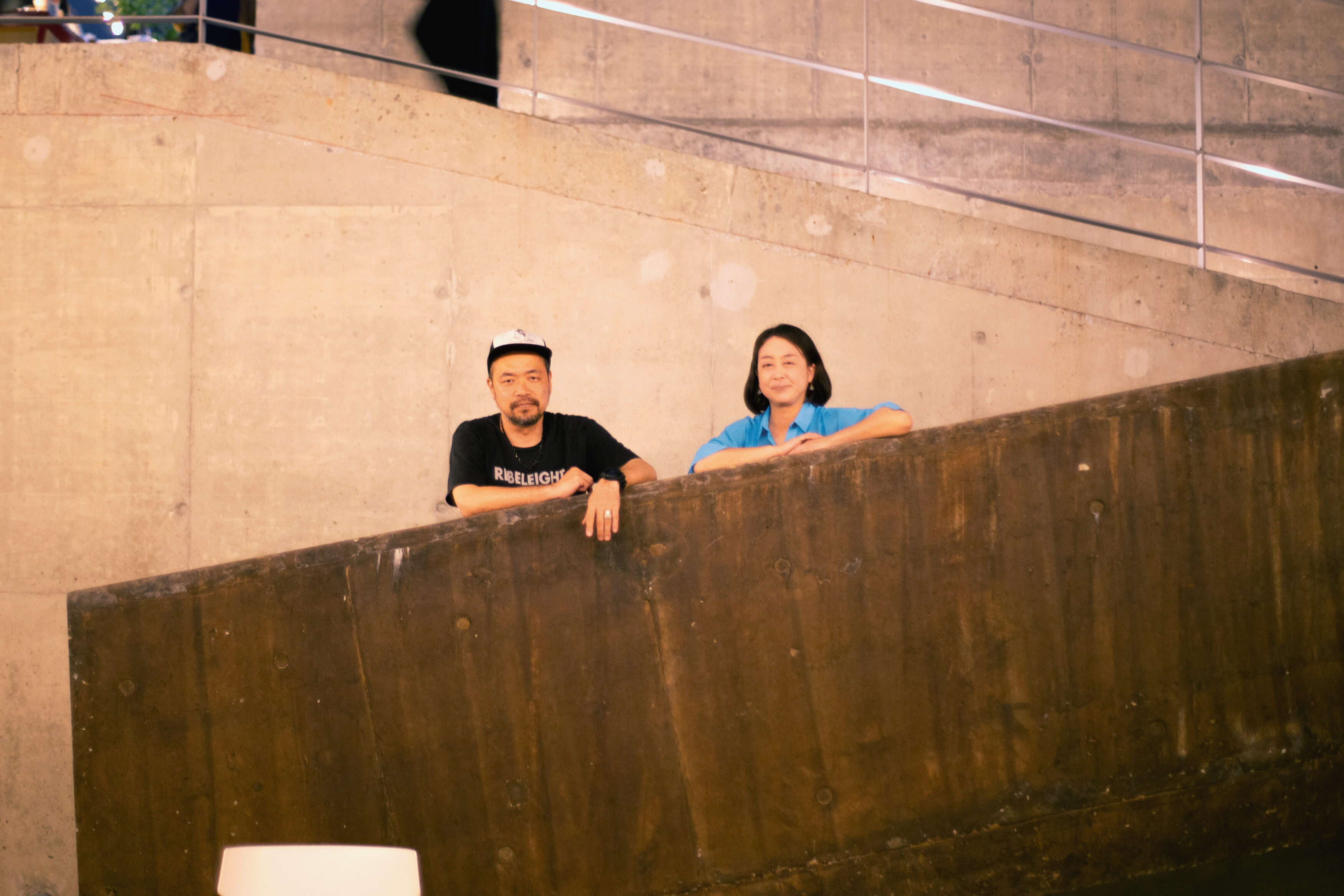
Photo by Wichaya Artamat
Carrying a pebble in my pocket—and Kyoto Experiment 2026
This year’s edition of Kyoto Experiment explores the idea of the pebbles we carry in our pockets. To convey and express memories and stories of others through the body: many of the works in the Shows program go back to this, the very essence of the performing arts, empowering them with the ability to locate forms of creativity that examine the present moment. The memories of individuals and a community contained within a theater venue. Poetry memorized by a grandmother that helps her cope with her encroaching blindness. Letters written to evade censorship. The bonds between migrants, their families, and the land. Books and dance arising from the intersection of poetry and the body. Such personal and collective memories and stories are conveyed through the medium of the performing arts, driven as it is by the urgent need to share something with others, and passed on to the audience at Kyoto Experiment’s spaces and locations.
Looking at the state of the world today, we find it overshadowed by inequality and division, and humanitarian crises persist amidst the ongoing conflicts and wars. At a time when sharing stories with others has become so increasingly difficult, we want Kyoto Experiment 2026 to offer chances to re-examine the very nature of a festival as a space for conveying and sharing narratives. And as a guiding concept, we propose the idea of the “pebbles” we carry in our pockets, by which we mean an image of small and nameless stones placed in our pockets, and carried around with us in life. Such pebbles are humankind’s oldest medium, one containing vast amounts of information, memory, and time, and also symbols of resistance.
Amidst ever widening economic inequality and social division, support is growing for politicians who advocate extreme views, and many aspects of life are measured by simple economic indicators. This trend is encroaching on culture—or rather, is already trampling all over it, and the marked increase in tendencies to evaluate culture purely in terms of economic value is something that many people involved in cultural and artistic activities feel keenly today. In Japan, news that the government has set quantitative targets for revenue generated by museums and art galleries suggests that such institutions are now expected to turn a profit. The wave of crowdfunding campaigns launched by national cultural institutions, including the Tokyo National Museum and National Film Archive, has sparked debate over the way these institutions are funded, and which shows no signs of abating.
While Kyoto Experiment also receives and utilizes such subsidies, the Japan Creator Support Fund established a few years ago is accelerating efforts to expand Japanese culture into overseas markets as “content”: in other words, culture as something marketed and sold. Requests from European curators to sign petitions addressed to their respective national ministries of culture regarding budget cuts are now reaching us in Asia, reflecting a shift in attitudes toward public funding for arts and culture, one that is linked to broader global changes, and evincing the fraught situation.
We have shared updates on Kyoto Experiment’s trials and tribulations with our audiences through the texts the directors have written for each festival. Amid the administrative and fiscal reforms enacted in response to Kyoto’s deteriorating finances during the COVID-19 pandemic, the city’s funding contribution to the festival’s executive committee was slashed in 2022 compared to the pre-pandemic level of 2019. A previously reliable source of funding, an Agency for Cultural Affairs grant for international exchange, came in well below expectations that year, further compounding the circumstances that ultimately compelled us to seek a new path forward through crowdfunding donations from the general public. While a donation system had existed since the very first festival in 2010, this marked the first time we had conducted a crowdfunding campaign to raise funds within a set period of time.
Though we received a lot of donations and successfully achieved our fundraising targets for the first campaign, we then faced the challenge of how to sustain subsequent editions of the festival. We devised a solution: KEX Supporters, a donation-based membership system launched in 2023. Every year, we recruit KEX Supporters for the upcoming festival, consistently attracting around 140 members and raising over ¥3 million. We are truly grateful for the generosity of our KEX Supporters.
The reality is that Kyoto Experiment has kept going this long by making efforts to secure new funding through public donations in combination with various grants and deft management decisions, but it is a fact that subsidy and grant systems are now undergoing change, and the attitudes toward funding that has underpinned the festival for over fifteen years are no longer viable. The impact of this was perhaps most acutely felt during our preparations for the 2026 edition, making it a particular challenge to program the festival. By dint of various managerial workarounds, this year’s participating artists are set to present some superb works and as always, it brings us immense joy to facilitate encounters between our audiences and these artists’ creations.
Despite the economic challenges described above, we are determined to stage and produce experimental, daring examples of artistic practices this year, because we believe there is still much that Kyoto Experiment can achieve both now and in the future in terms of fostering experimental performing arts and developing a foundation to undergird them. With renewed resolve, we will carry various forms of artistic expression and other pebbles in our pockets, moving forward as a festival not just this year, but on and into the future. We hope to receive your continued support in these efforts.
Yoko Kawasaki, Yuya Tsukahara
Co-Artistic Directors, Kyoto Experiment
Co-Artistic Directors, Kyoto Experiment

Yoko Kawasaki
After working at CAN Inc. and as an art coordinator for Kyoto Art Center from 2011-2014, she was a fellow for the Program of Overseas Study by the Agency for Cultural Affairs of Japan and studied at HAU Hebbel am Ufer in Berlin. In recent years she has planned and produced interdisciplinary performing arts projects. She has been involved as production coordinator at Kyoto Experiment since 2011 and is co-director since 2020.
Yuya Tsukahara
After graduating with a master’s degree in Aesthetics and Art Studies from Kwansei Gakuin University, he joined NPO DANCEBOX as a volunteer and later became a staff member. In 2006, he began activities as an artist as a member of the performance group contact Gonzo. In 2020, he received the Best staff award at the Yomiuri Theater Awards for his scenography and choreography in the theater work Pratthana – A Portrait of Possession. Since 2020 he is also a part-time lecturer at the Department of Sculpture at Kyoto City University of Arts.