[Article] Whose Pebble Is That?: Keiichiro Matsumura
2026.9.16 (Wed)
The festival’s key phrase for 2026 is “Carrying a pebble in my pocket.”
In conjunction with this, we asked three writers to contribute articles about this key phrase.
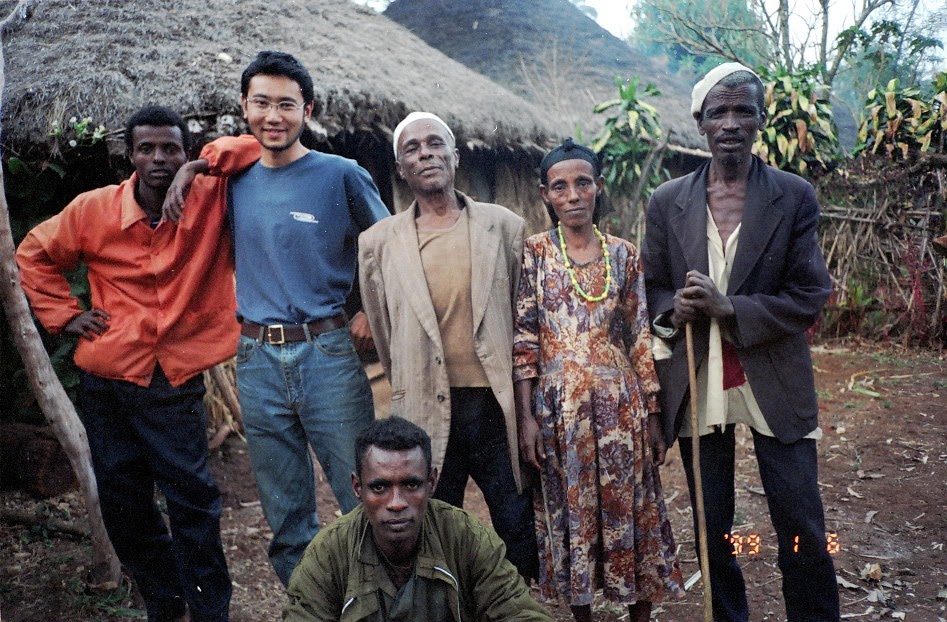
My research has studied the concept of ownership in Ethiopia. It all began in an Ethiopian village where I did my first fieldwork, and where “my” things were treated as if they did not in fact belong to me. The experience led me to reflect on why such an economic gulf existed between Ethiopians and me.
As a college student, all I had to do was work a parttime job and save up money, and then I could travel to Ethiopia and stay a long time. For Ethiopian villagers, however, it was a challenge just to scrape together enough money to go to the city. Was what is “mine,” which I believed I’d obtained by working hard, really due to “my” efforts? Did it not just come down to having the good fortune of being born and raised in a rich country like Japan? Such doubts began to creep into my mind.
To whom does what is “mine” even belong? It is a question that also entailed re-examining the actual concept of private property, upon which modern society is premised. John Locke was an English philosopher fundamental to the development of modern thought, especially in regard to democracy, and he argues in Two Treatises of Government that each individual owns their body and, as such, if they use their body to work, it is legitimate that they then own the fruits of that labor.
If I till the land, the crops I cultivate there are my property, as is the money earned from selling them. This logic was necessary to ensure that the wealth someone acquired through their own effort would not be unjustly seized by those in power or others. It is also one of the fundamental principles underpinning the modern market economy. The money I obtain by selling what belongs to me is mine. I use that money to pay for your goods, which then become mine. Reject this principle and the world today would cease to function properly.
But is that really the case? In the first place, is my body even mine? Something I obtained through my own labor becomes mine. But if we keep to that logic, it means I have done nothing to obtain my life or body. No one gives birth to themselves. My body was, in effect, given to me. As such, the very premise of “my” body, which forms the starting point for Locke’s concept of ownership, is called into question.
And what about the crops I worked so hard to grow and nurture also being “mine”? When we think about it, we cannot so easily justify such a claim. After all, the land, water, and sunlight that constitute the main elements necessary for crops to grow are not created by people. They are all things that have been given to us. Viewed in this light, we realize almost nothing in the world can confidently be described as truly mine.
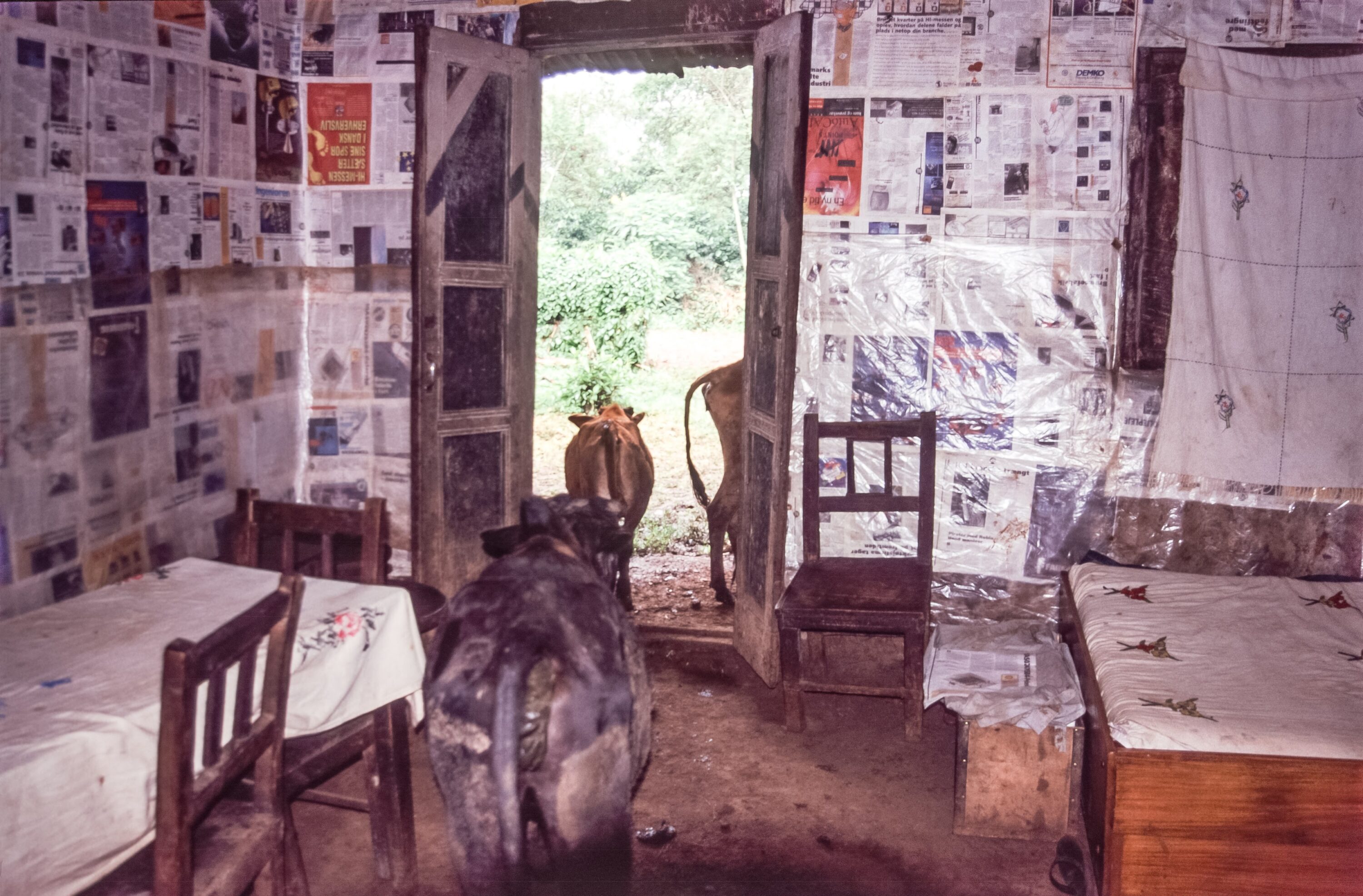
Virtually nothing is created solely through human effort, whether it is the cells and genes that make up our bodies or the food that sustains our lives. Since natural materials, energy, and life itself are given to us, the wealth and commodities we produce through them cannot be claimed as exclusively ours. A little question that occurred to me in an Ethiopian village led me to inquire into the very fabric of society today.
In the Ethiopian village where I did fieldwork, the harvested crops were not kept solely for an individual but shared with relatives and the poor within the community. Why was sharing so frequently practiced? That, too, was a mystery to me.
There was a large avocado tree in the yard of the farmhouse where I was staying in the village. One day, a gaggle of monkeys descended on it and began eating the ripe fruit. Frustrated, I picked up a small stone and threw it at them. The old farmer nearby watched this scene calmly and chuckled at my futile attempt to stop them. Not for the life of me could I understand his sangfroid in the face of monkeys eating the avocados from his own tree.
Looking back now, the Ethiopian villagers may have just realized that avocados do not grow on trees solely thanks to their efforts. Assuming humans were indeed the ones who planted the saplings, their growth into mature trees was made possible by sunlight, rain, and the insects and bacteria that enrich the soil. In fact, humans had almost no involvement in the process.
Precisely because the fruit is given to us, it should be shared instead of monopolized. Why would I share what is mine with others? Framed that way, the question takes for granted that the fruit is mine in the first place. But if we see the crops or fruit we harvest as not exclusively ours, there is no longer anything strange about sharing them.
Even a pebble rolling at your feet does not inherently belong to anyone. Say I found it, the very existence of the pebble is the result of planetary tectonic shifts and weathering, and of river erosion, transport, and sedimentation. Nonetheless, humans have across history claimed all manner of things on the planet as their own, and monopolized the wealth obtained from them. Europeans “discovered” the Americas and claimed the land as their own, even though it was already inhabited by others. They claimed the minerals and fossil fuels buried in the land as their own. They claimed the money earned from selling those resources as their own. This chain of claiming has led to staggering inequality in our world, notwithstanding how impossible it is to justify such actions.
That pebble you have tucked away in your pocket is not exclusively yours. And for that very reason, it is meant to be shared with the person beside you. “Look,” you might tell them, “I found a nice pebble. You keep it.” What is mine is not mine alone. We share what is ours. And by so doing, the world changes.
The photographs on page were taken by the author during his first trip to Ethiopia.
Author Profile
Keiichiro Matsumura
Keiichiro Matsumura is a cultural anthropologist whose research specializes in the ownership and distribution of wealth, poverty, development aid, and working abroad, with a particular focus on Ethiopia and the Middle East. His publications include Anthropology of Possession and Distribution (Chikuma Gakugei Bunko), Anthropology of Guilt (Mishimasha), and Across the Seas (Kodansha). His films about Ethiopian village life, Megabit: Waiting for a rain and A Day of Abba Oli, screened at the Tokyo Documentary Film Festival in, respectively, 2018 and 2020.