Alice Ripoll: Artist Statement
2026.10.5 (Mon)
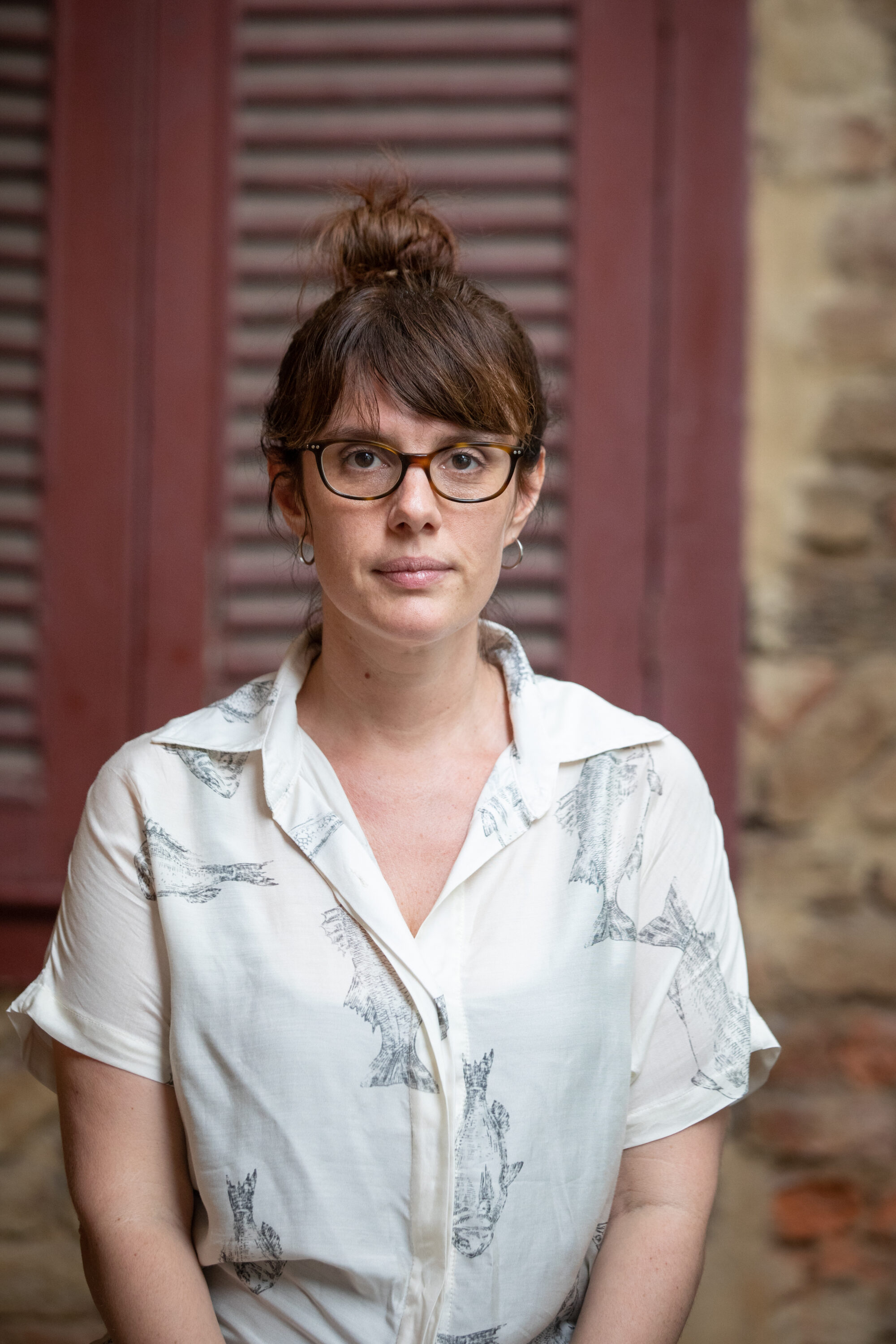
Photo by Renato Mangolin
It happened when I was very little and started learning these things: that we lived on a planet called Earth, that the Earth was round, that there were other planets, etc. However, for some time, I believed that we lived inside the Earth, on the inner surface of the globe. I imagined that the stars, the clouds and the sun were right in the center of the sphere. I clearly remember the feeling of thinking this way. I already knew that there were other countries, and that Japan was the farthest one. In Brazil, we always say that Japan is on the other side of the world.
Then, one night, looking at the sky with my sister, I asked her to show me Japan. I thought that, if we looked carefully enough, we would be able to see Japan through the stars, on the opposite side of the inner surface of the Earth. My sister, two years older than me, looked at me astonished, and it was from that moment that I understood that we lived on the outside of the Earth. I remember that conversation very well, and Japan remained marked for me in this discovery.
Already working with dance, in 2012 I went to see a performance by the Japanese company Contact Gonzo in Rio de Janeiro, where I live. Cia. REC, which I direct, was just beginning at that time. At the same time, I was performing in another piece as an interpreter, directed by Renato Linhares. During this process, enthusiastic about contact Gonzo, we kept trying to reproduce their movement, pushing each other, hitting each other, improvising. This reference even remained in our piece, in a scene that we internally called “Gonzo.”
Many years later, I was presenting my piece Lavagem in Montreal, with Cia. REC, and met the curator of Kyoto Experiment, Yoko Kawasaki, who expressed a desire to bring our work to Japan. I was radiant, and she asked me if I knew anything about dance from Japan. A little embarrassed by knowing so little, I told her about my only (but striking) experience with contact Gonzo. To my surprise, she said: Yuya Tsukahara, the director of that group, is the other programmer of the festival. He was the one who recommended that I see your work! I couldn’t believe it. So the member of contact Gonzo already knew and admired my work?! I became even more radiant!
We took Lavagem to Japan. I was deeply moved that my work was taking me so far. I had never imagined that my work could take me to the other side of the world of my childhood. For me, this was a great recognition of the universality of our creations. Although many people associate our performances with political issues in Brazil (and they are right), this is only one layer of the research. There are many others: interpersonal, unconscious, abstract, pictorial, historical, medicinal, which for me have always been the most important ones, and I believe that this trip to Japan reinforced this for me.
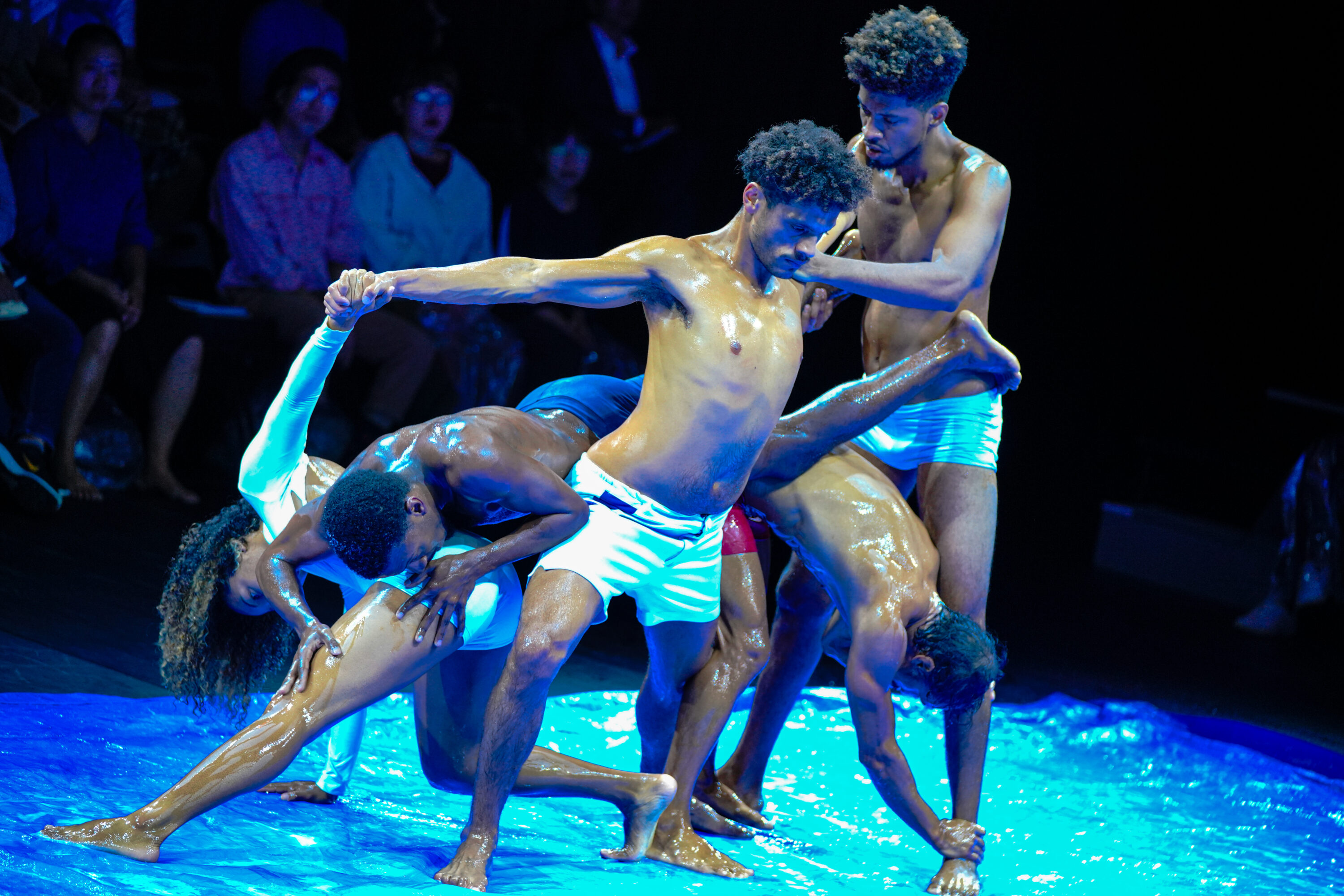
撮影:吉見崚
I was deeply touched by the audience’s concentrated gazes, the penetrating, respectful and affectionate silence, the conversation afterwards, where I spoke at length about our creative processes and found such close interlocutions. On the other side of the world.
A few years later, I was invited to participate in a mentoring project in Berlin, Forecast. I was extremely excited and said YES a little too quickly, without researching the project beforehand. Minutes later, suspicious of my hasty acceptance, I went to look at the mentors who had taken part in the project before, and discovered that Yuya had participated in the previous edition. I immediately sent him a message asking if he had enjoyed taking part, to which he replied: not only did I really enjoy it, but I was the one who recommended you for the project!
A little while later, when I found out who the other mentors were, I discovered that one of my companions would be the Japanese photographer Lieko Shiga. I mentioned this to my friend Renato, who directed that work we were doing in 2012, and he reminded me that he had brought photographs by Lieko during the process, and that they had also been part of our research. We were connected through so many layers, and I told Yuya about this, who told me that he had also recommended Lieko for the same project, and that they are friends. Our connections just keep sprouting!
I think I will also never forget the feeling of arriving in Kyoto. Even under the greatest time difference in the world (12 hours), still half-dazed, there was no way to stay in the hotel room. Despite the exhaustion, we had to step onto Japanese soil as soon as possible. We ran out into the street. I close my eyes and relive the smell. The silence. The glow of the traffic signs. The colors. A city that is liquid, subtle, and carries a pleasant aroma.
The red of the buckets filled with water from the Lavagem set immediately positioned the work in Kyoto. It was exactly where it was supposed to be. Maybe it was a Japanese work.
I also clearly remember when I left the festival. I was very happy, but with the feeling that, if we ever came back there, perhaps it would take 10 or 15 years. After all, it is the other side of the world! And yet, wasn’t it faster? Three years later, we are back!
It is so emotional.
See you at Kyoto Experiment!
Alice Ripoll
- related programs
-
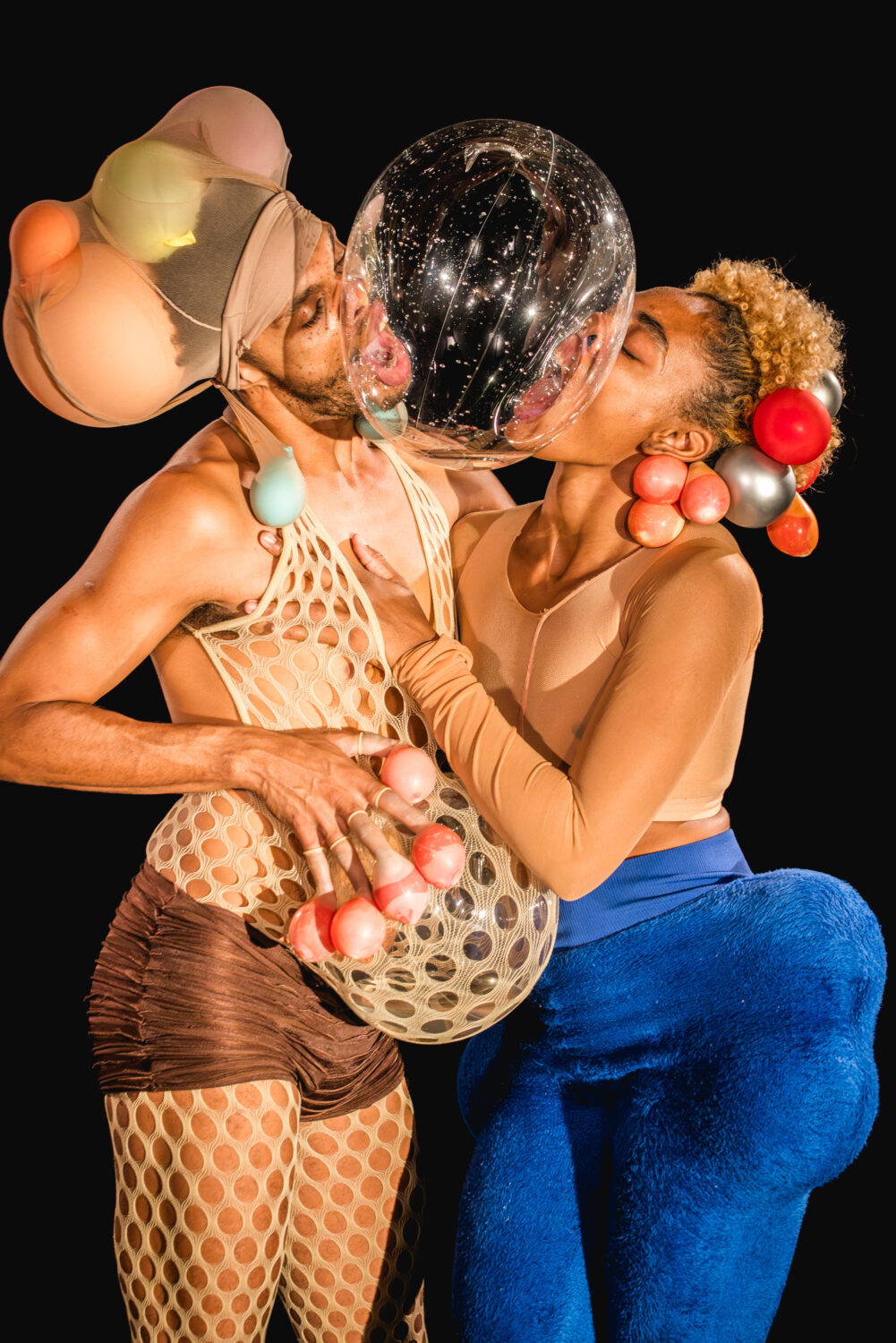
アリス・リポル / Cia. REC
Adorno(装飾)
- related magazine
-
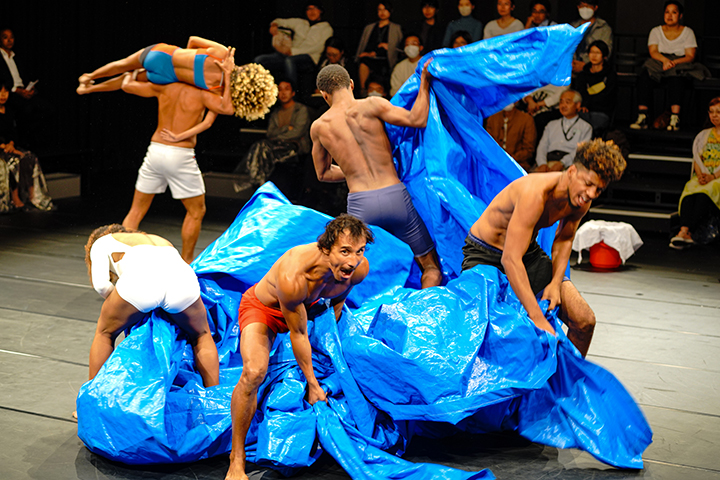
アリス・リポル / Cia. REC『Lavagem(洗浄)』レビューまとめ
2026.8.13 (Thu)