Echoes Now

©Atsuko Takeuchi (XS)
- Date
10.21 (Wed) 18:00 ★
10.22 (Thu) 11:00
10.22 (Thu) 16:00 ★
★ Post-show talk
- Venue
- ROHM Theatre KyotoNorth Hall
- Duration
135 min (TBC)
*3 performances with set change / intervals between each performance
- Price
Adult: ¥3,500
Youth*, Students: ¥3,000
High School Students & Younger: ¥1,000
Pair: ¥6,500
Day tickets: Advance ticket price+¥500 (High School Students & Younger: ¥1,000)*25 and under
- Language
[舌湯 tong tang]
Japanese, Taiwanese and Chinese with Japanese and English surtitles[THE EARTH]
Japanese and Berabera (fictional language) with English surtitles[Performing the Performance of Sleep]
Japanese with English surtitles
©Atsuko Takeuchi (XS)
Meet emerging curators
and artists through
three cutting-edge pieces
Echoes Now is a performance program by Kyoto Experiment that showcases the next generation of curators and artists. Led by three curators who come from various fields and hold different backgrounds, the program introduces artists creating experimental work.
In its third year, Echoes Now will be held at ROHM Theatre Kyoto’s North Hall. The distinctive space that a black-box venue provides should further stimulate the ideas of curators and artists, encouraging them to come up with new attempts. While Kawaguchi and Tsutsumi come back to work with the same artists they curated last year with new experiments, Wada unfolds her program with a group of new artists.
Maki Kawaguchi Program
hayate kobayashi
舌湯 tong tang [Performance]
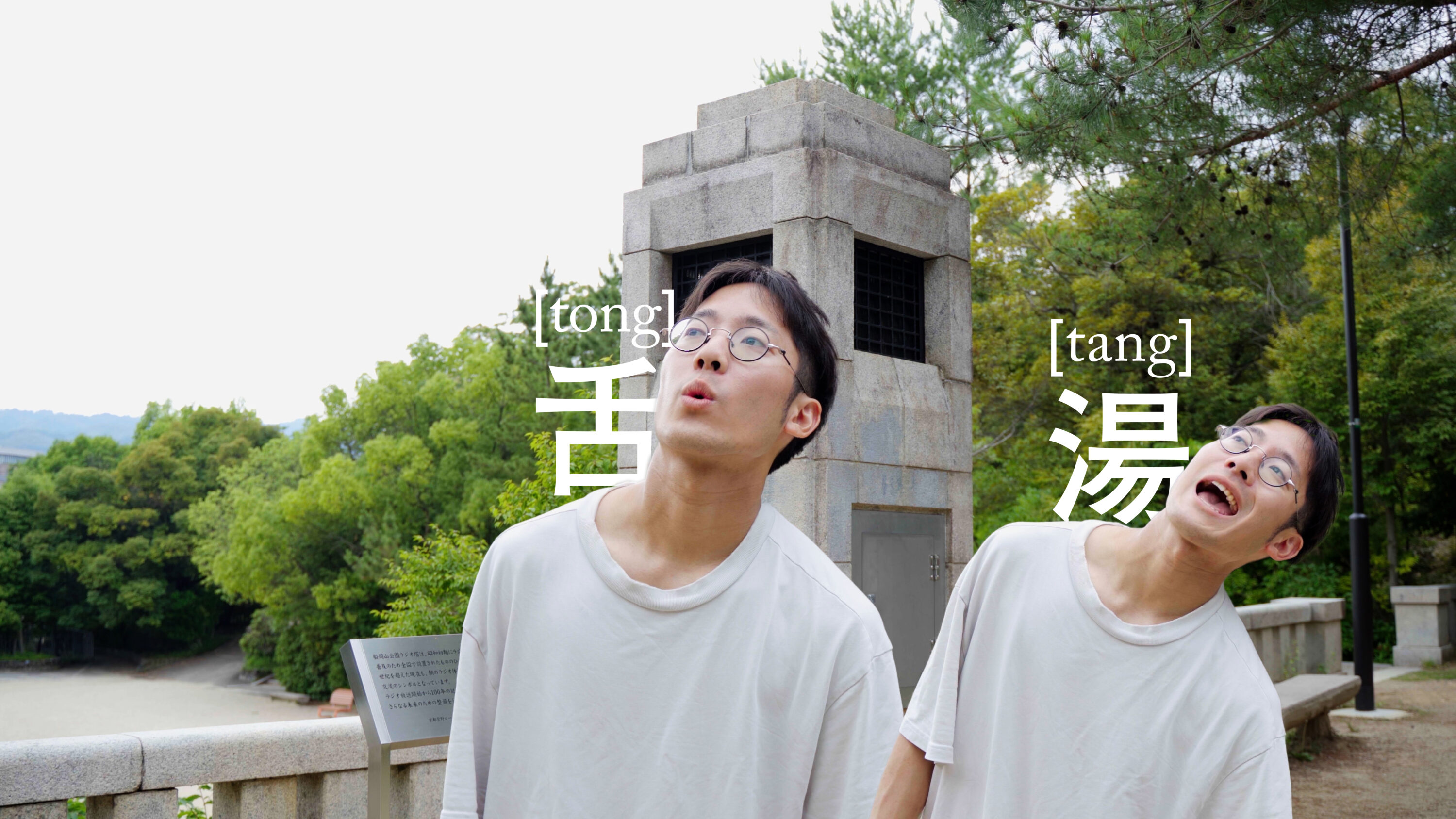
Lee de Forest, the inventor of the triode vacuum and a pioneer in radio broadcasting, described mass radio as the “Empire of the Air.” This electronic empire of the air rapidly spread throughout the world and unified people’s consciousnesses while also stripping away their voices. This was the 1920s.
In the postwar context, however, electronic waves beyond the influence of the empire began to emerge. The development of mini-FM in Japan and underground radio in Taiwan were part of a movement to reclaim media that had become deeply intertwined with power and capitalism. Particularly in Taiwan, it was an act that demonstrated the agency that individuals had over their own voices.
hayate kobayashi, who had been searching for “migrating voices” that appear in the process of forming an identity, encountered the underground radio movement in Taiwan and learned about radio broadcasting during the Japanese occupation. These interests eventually led to the gender-bending genre of tongzhi literature. Using radio—a medium that transforms from a symbol of fascism to a pillar of individual solidarity—this work serves as an experiment to capture the identity struggles of transborderers who traverse various boundaries, including gender and language.
Curator’s Statement (Maki Kawaguchi)
“Uh…hello, can you hear me? Can you hear me? Hello, hello…”
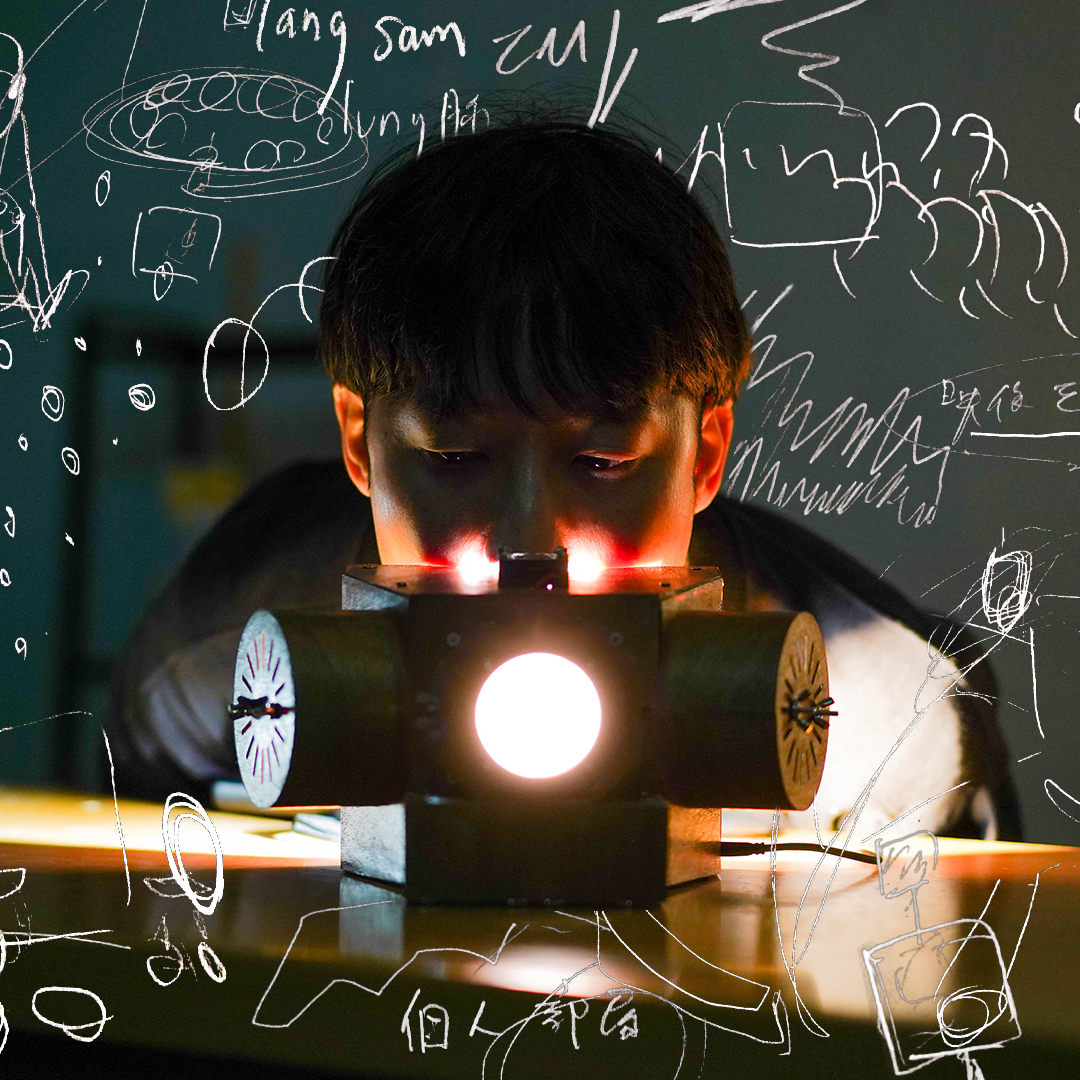
kobayashi, who describes himself as fearful of talking to people, converses with others through an apparatus. Using unstable signals that may or may not connect, he attempts to speak with others in front of him as well as those who are not visible. While occasionally checking whether the connection is going through, he constantly projects his voice through a weak signal that could easily be cut off. If I were to transcribe his words onto my smartphone, how many characters would they add up to? Regardless, kobayashi continues to send and receive signals through the apparatus. The accumulation of these efforts does not culminate in anything. Rather, his expectations lie in the process itself and in the conditions whereby voices encounter one another, and things begin to emerge together.
Curator Profile
Maki Kawaguchi
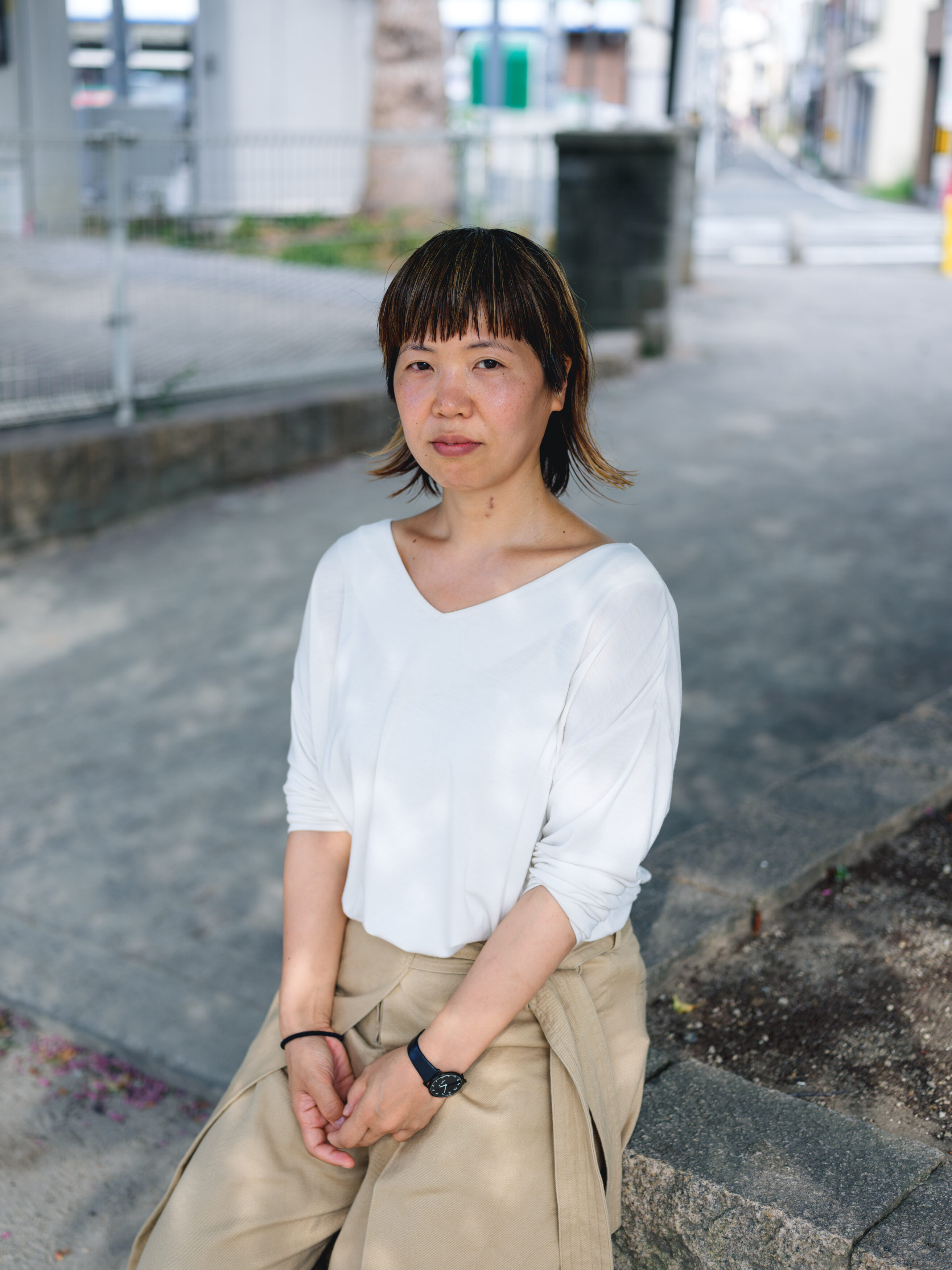
After withdrawing from the Art Planning program at Seian University of Art and Design, Maki Kawaguchi worked in agriculture. From 2009, she joined Art Area B1 in Nakanoshima, Osaka and was involved in producing exhibitions, music events, and performances. Kawaguchi presided as the director and secretary general there from 2013 to 2023. Since February 2023, she has worked in public relations in the Kyoto City Kyocera Museum. Independent of her work at the museum, she also collaborates with artists by organizing exhibitions.
アーティストプロフィール
hayate kobayashi
Kyoto, Japan
Born in Hokkaido in 1995, kobayashi completed a Master Program in New Media at the Graduate School of Film and New Media, Tokyo University of the Arts. Between 2020 and 2024, kobayashi stayed in Berlin, Germany, with the support of Ezoe Memorial Recruit Foundation Scholarship. In 2024, he graduated from Art and Media at the Berlin University of the Arts. With moving images and self-made apparatuses, kobayashi explores a new form of narrative of the Exophonie. In his recent practices, from the perspectives of the outsider migration, he focuses on the transborderers’ linguistic sensibility. Recent solo exhibition include Appeartus #1 (Chidori Bunka, Osaka, 2026) and Polyparole (Art Center BUG, Tokyo, 2024).
Takuya Tsutsumi Program
Tomonosuke Kurachi
THE EARTH[Performance]
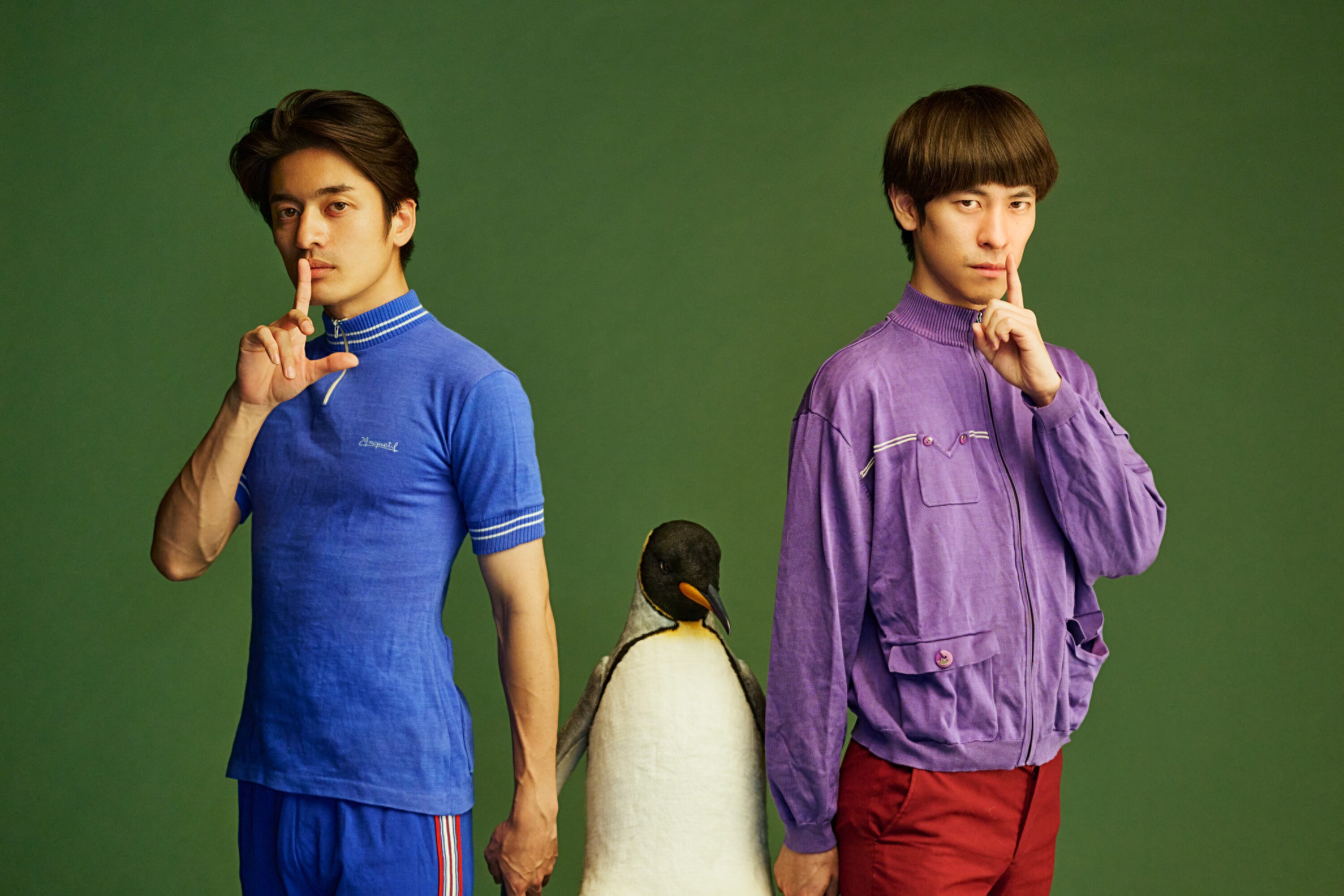
Photo by Nanako Kobayashi
Tomonosuke Kurachi has made many short films that are comical and at times ridiculous, reveling in “bad taste” and inside jokes. In his first theater work shown at last year’s Kyoto Experiment, SOFTBOYS: Datte Mada Mada Ima Kita Bakka!, he directed, quite literally, a story about a boy idol group member’s sudden illness and eventual recovery. Since then, Kurachi has maintained his interest in his core themes while recently expanding his work to include performances staged at riverbanks or simply while standing next to someone. Pursuing this new avenue in his work, Kurachi embarks on the challenge of presenting an ambulatory performance-installation that uses the entirety of the North Hall. There, he attempts to directly apply the methodologies he has developed within the realm of video to the theater space.
Curator’s Statement (Takuya Tsutsumi)
This is my second time selecting Tomonosuke Kurachi for the Echoes Now program. Looking back on my career, it’s very rare that I work with the same artist two years in a row. If I must confess my reason for doing so, it’s because I felt that his work last year, SOFTBOYS: Datte Mada Mada Ima Kita Bakka!, was successful, but could still be pushed further. I have a feeling that Kurachi—who generally affirms my suggestions but is actually hard to read—has the potential to keep making weird and experimental performances for us.
Curator Profile
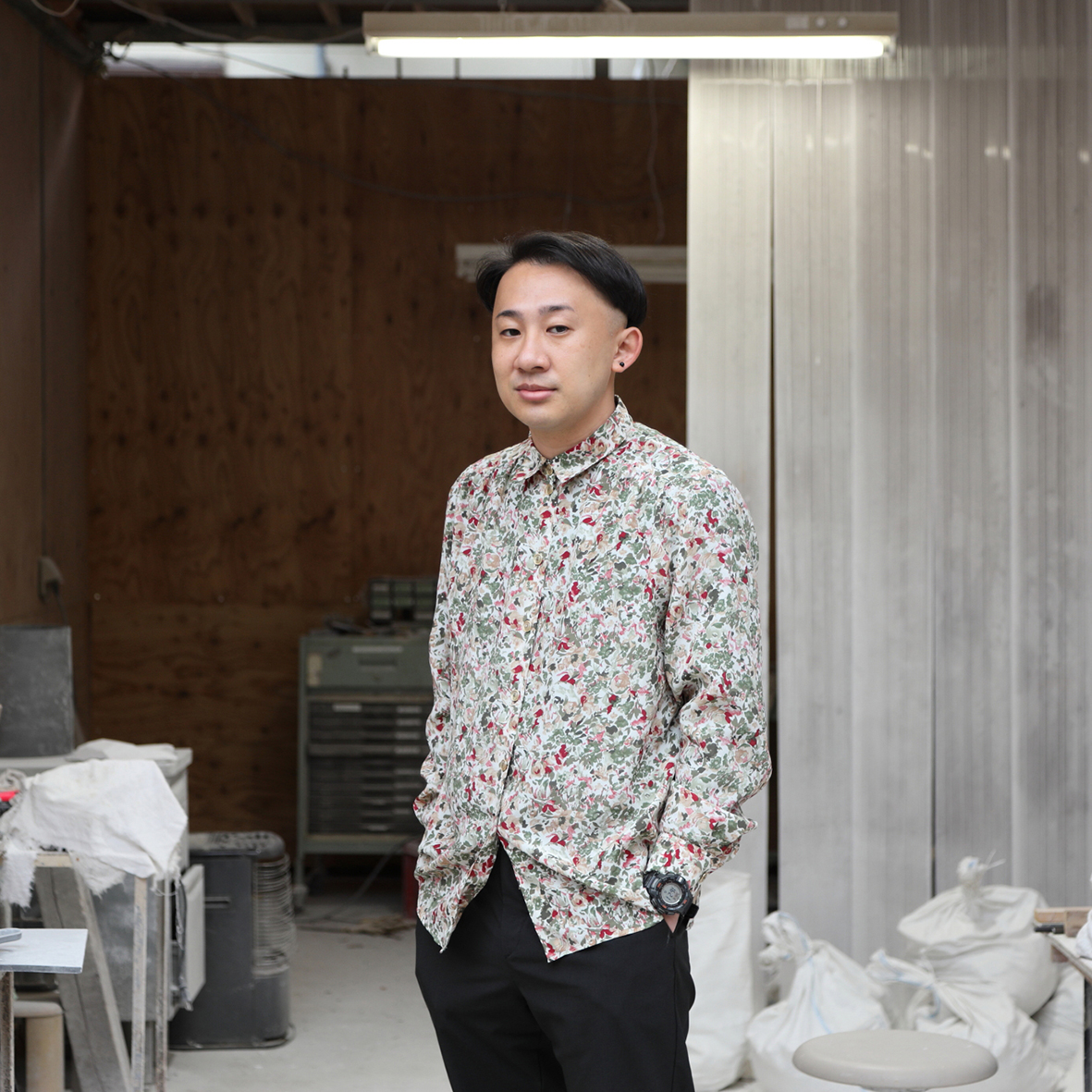
Takuya Tsutsumi
Born in 1987, Takuya Tsutsumi is a Kansai-based curator and graphic designer. He graduated with an MA in cultural studies from Adam Mickiewicz University in 2019. In addition to designing exhibition spaces, Tsutsumi creates one-off performative experiences and is particularly interested in non-institutional practices, especially across Asia. His directing and curatorial credits include Share-Meeting 2: The Successive Gathering and Momentum of Becoming (2025, Shiga), MEET YOUR ART FESTIVAL 2024: SSS—Super Spectrum Specification (Tokyo), Takuya Yamashita’s solo exhibition Hope Embedded in Darkness: Bear, Munch, Cheeseburger, and Others (2023, Taipei), and Aichi Triennale 2022. Tsutsumi is Program Co-director for the shared studio space Yamanaka Suplex, Program Director at ICA Kyoto, and an associate professor at Kyoto University of the Arts.
Artist Profile
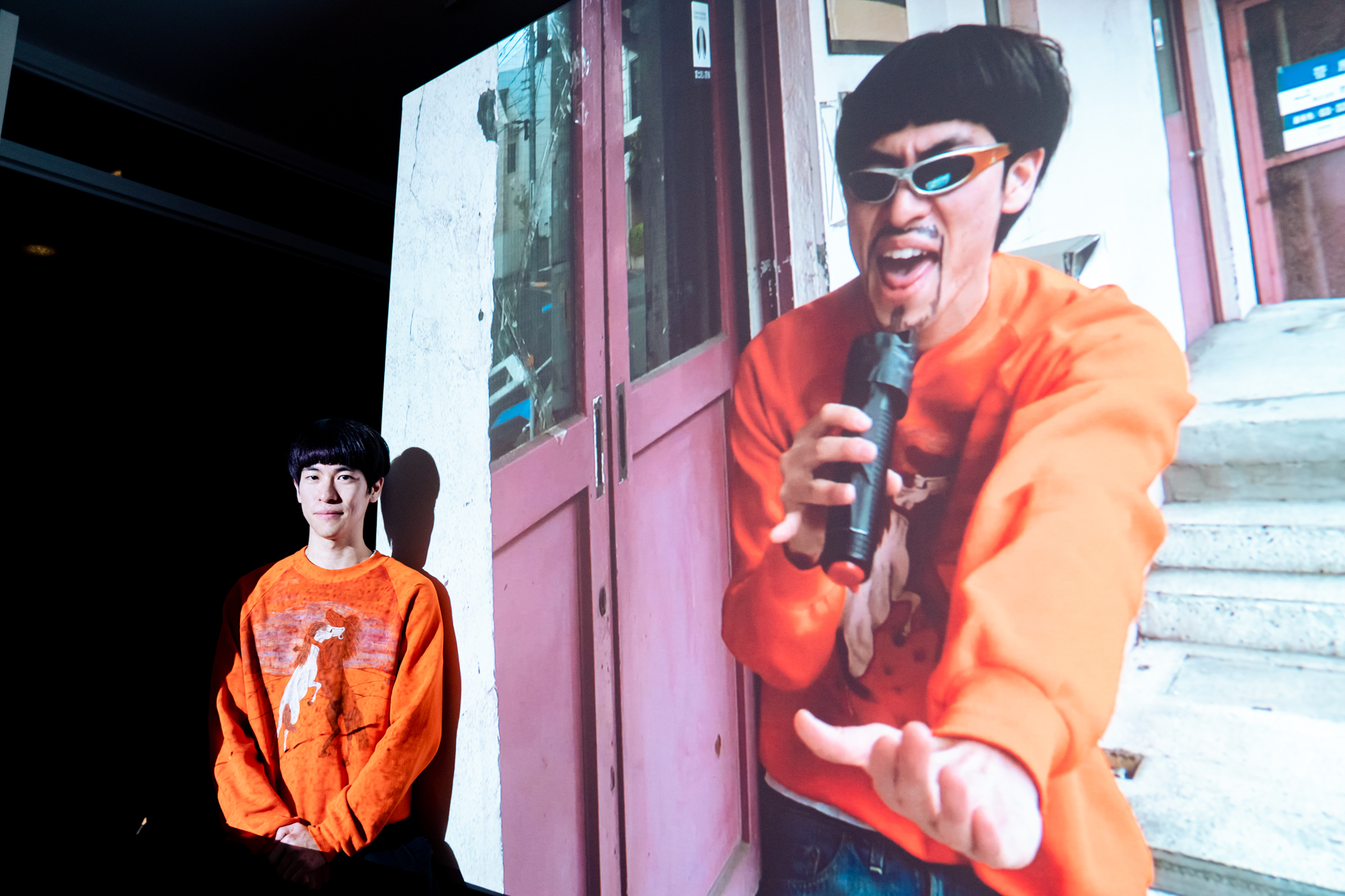
Kurachi Tomonosuke
Tokyo, Japan
Kurachi Tomonosuke creates video installations based on critical views on entertainment, in which he directs and plays the leading role. He appropriates well-known forms of entertainment like TV dramas, music videos, or movies and slickly provokes laughter by imitating them, which he sees as an act of primitive exaggeration. His set and costume designs reflect everyday objects and they are made instantly. In this way, he converts the daily sphere into an amusing arena. Through improvising rhythmic vocalisations, he exposes absurdity out of meaning or meaninglessness. Kurachi asks himself questions about the nature of postmodern entertainment and humanity, practising artistic expression originated in laughter.
Nagara Wada Program
Sora Izumi / Usagi no Aegi
Performing the Performance of Sleep [Theater]
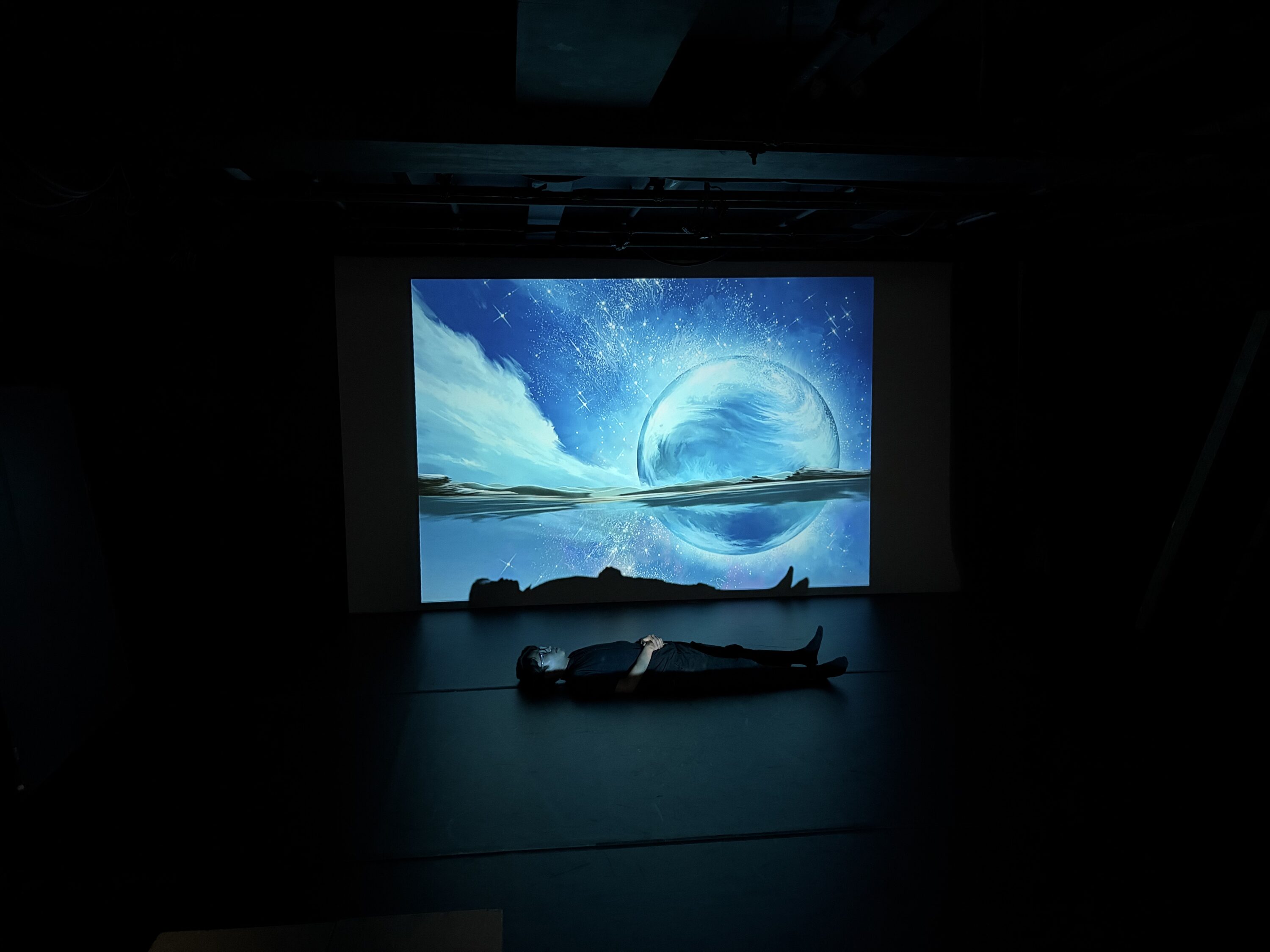
Among developed countries, Japan is known for having the shortest average sleep. This sleep debt is said to be lowering productivity and causing huge economic losses. Performing the Performance of Sleep tackles this depressing fact with an approach distinct to theater.
Usagi no Aegi, a theater company that features Sora Izumi as writer and director, has presented unique and experimental works including Imi Imi, composed of tautologies such as “I am I,” and Theater RTA Hamlet, which takes real-time attack (RTA) video game speedrun strategies and applies them to theater in order to “beat” a Shakespeare play. For this year’s Kyoto Experiment, the company presents a revised version of Performing the Performance of Sleep, which premiered in 2023. In a country known for a population that does not or cannot sleep, an actor takes all the steps necessary to get ready for bed and performs “quality sleep” in front of the audience.
Curator’s Statement (Nagara Wada)
Whenever I experience the works of Usagi no Aegi, I am reminded of the fact that theater is an art form that tests our sense of temporality. I find myself grinning and shuddering at the way the actors’ bodies and performances critique contemporary society’s sense of time—one in which everything is instantaneously updated and synced no matter where we are, and time efficiency is the standard measure of value. I also wonder: Is the actor performing sleep actually acting? As children, playing possum is one of the first acts we learn to perform. In this work, Usagi no Aegi is also testing the very concept of acting in the context of theater.
Curator Profile
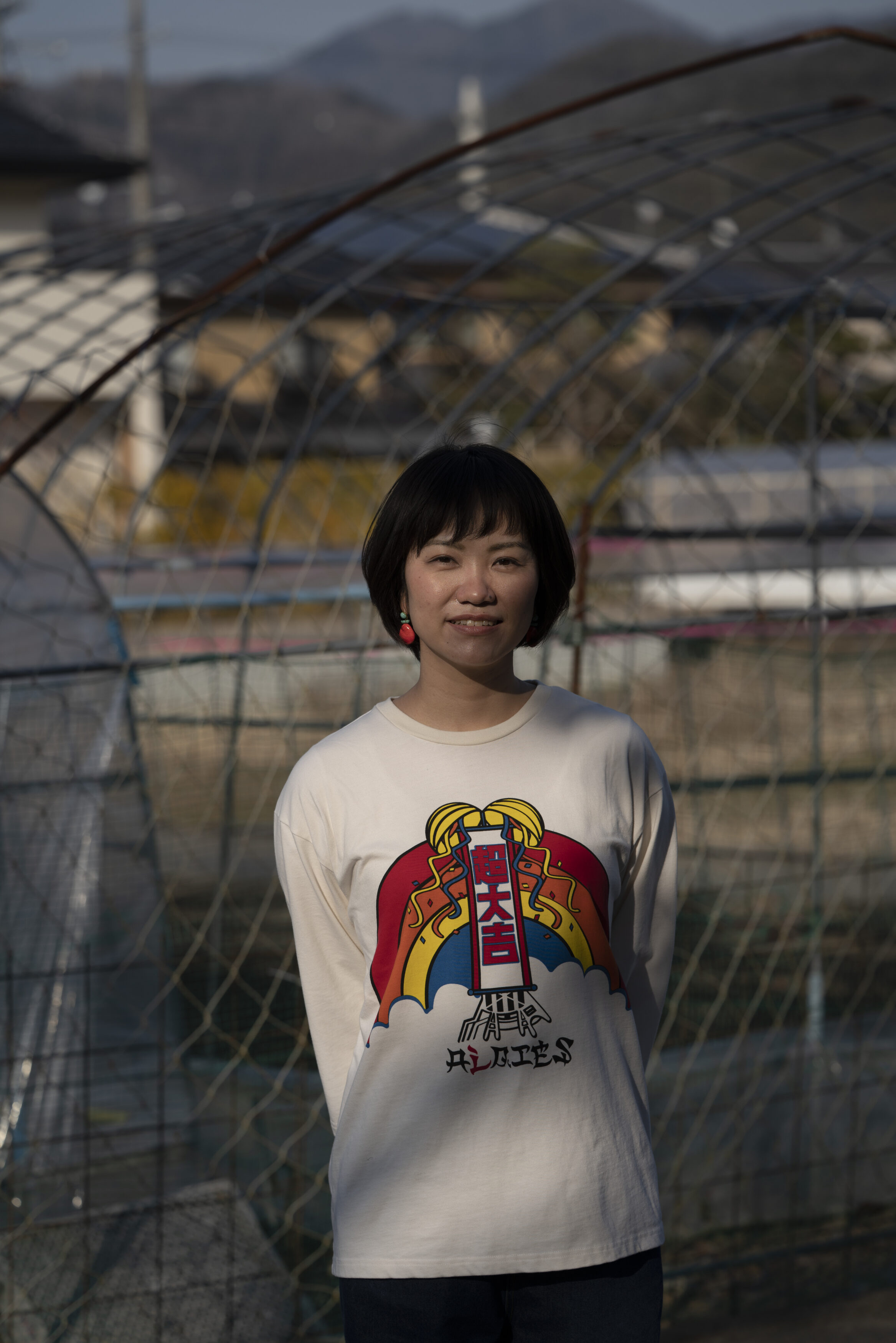
Nagara Wada
Nagara Wada graduated with a degree in film and performing arts from Kyoto University of Art and Design, and then completed the art studies master’s program at the same university. In February 2011, she began working as a theater director based in Kyoto and founded her own theatre unit, shitatame. With a deep interest in the act of acting, Wada deciphers texts and motifs as if zooming into them, aiming to establish a distinct language for acting with each performance. She actively pursues collaborative projects, and through the medium of theater, she connects with artists from various fields, including visual art, photography, architecture, music, sculpture, and dance. Since 2018, she has served as a member of the booking team for the multidisciplinary art space UrBANGUILD, where she organized 3CASTS, a performance series that focuses on actors. She is The Saison Foundation ‘Saison Fellow I’ from 2025 to 2026.
Artist Profile
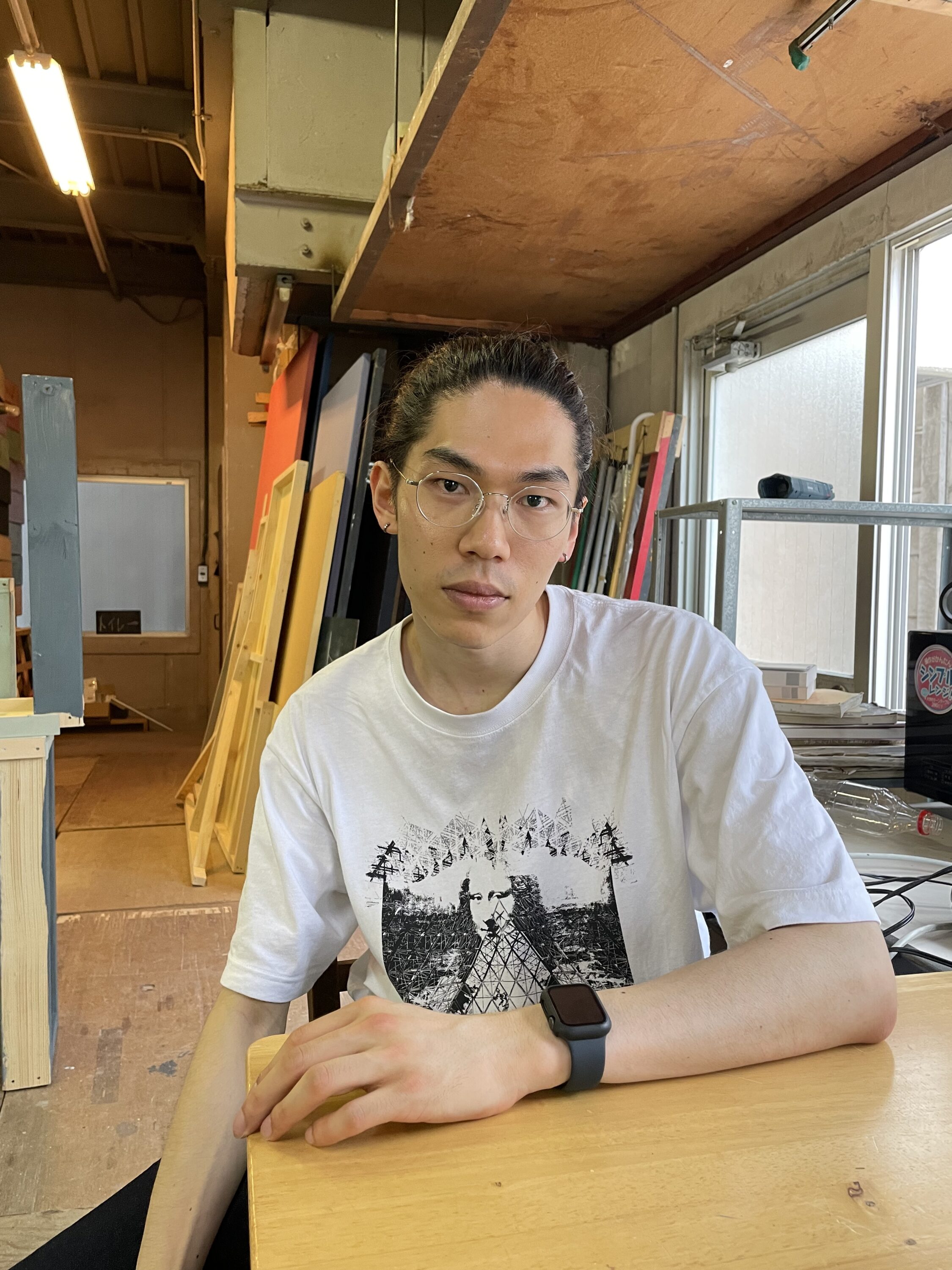
Sora Izumi
Osaka, Japan
Izumi is a playwright and director, born in Osaka in 1996 and graduated from Osaka University of Education. He founded Usagi no Aegi while at university. Has written and directed most of the company’s productions since then. Izumi is also a staff member at Wingfield since 2022, where he has initiated theater criticism projects and workshops on safe rehearsal practices, while fostering the next generation of artists. Board member of DIVE Osaka Contemporary Performing Arts Association and the
Usagi no Aegi
Usagi no Aegi was founded by the playwright and director Sora Izumi and the producer Natsuki Nakasuji in 2017, and has been active in the Kansai region since. Exploring with the “lost sense of reality among modern people”, the company creates and presents works that are experimental and avant-garde, yet somehow have a nostalgic element. Those works are characterized by unique theatrical experience provided by the combination of fine texts that focus on the “pain and grief that were considered as not having been felt”, and the provocative staging that persuade the audience to think deeply. The company is selected to take part in ROHM Theatre Kyoto + Kyoto Art Center KIPPU Under 35 Creative Support Program 2026.
hayate kobayashi, 舌湯 tong tang
Playwright, Direction: hayate kobayashi
Performers: hayate kobayashi, Xu Qiu Cheng, and more
In co-operation with HAPS
Supported by Arts Support Kansai
Tomonosuke Kurachi, THE EARTH
Direction: Tomonosuke Kurachi, Yuto Yonemura
Video, Performance: Tomonosuke Kurachi
Concept, Set Design, Performance: Yuto Yonemura
Performers: Sophi U, Kakeru Kojima, Kosei Nishino, Takahiko Yanagisawa
Assistant Director: Shiho Hirai
Production Assistant: Uta Kawai
Sora Izumi / Usagi no Aegi, Performing the Performance of Sleep
Text, Direction: Sora Izumi
Cast: Taiki Kuno (REFUGIA)
Assistant Director: Takamune Watanabe (Paint Talent)
Production Support & Surtitles: Toko Murata
English Surtitles: Junro Shibata
Stage Manager: Shunsuke Watanaka
Lighting: Chisako Yasutake (RYU)
Sound: Tatsuya Shimada (night cruising)
Video: Saori Yao, Yoshitaka Shimada
Stage Technician: Yuhi Kobayashi, Mao Sakai
Production Management: Nagara Wada, Yoshimi Toyoyama
Produced by Kyoto Experiment
Supported by Japan Creator Support Fund
Presented by Kyoto Experiment