The Performing Arts Program at MMCA and the Showcase Performances Sung Yonghee
2026.9.17 (Thu)
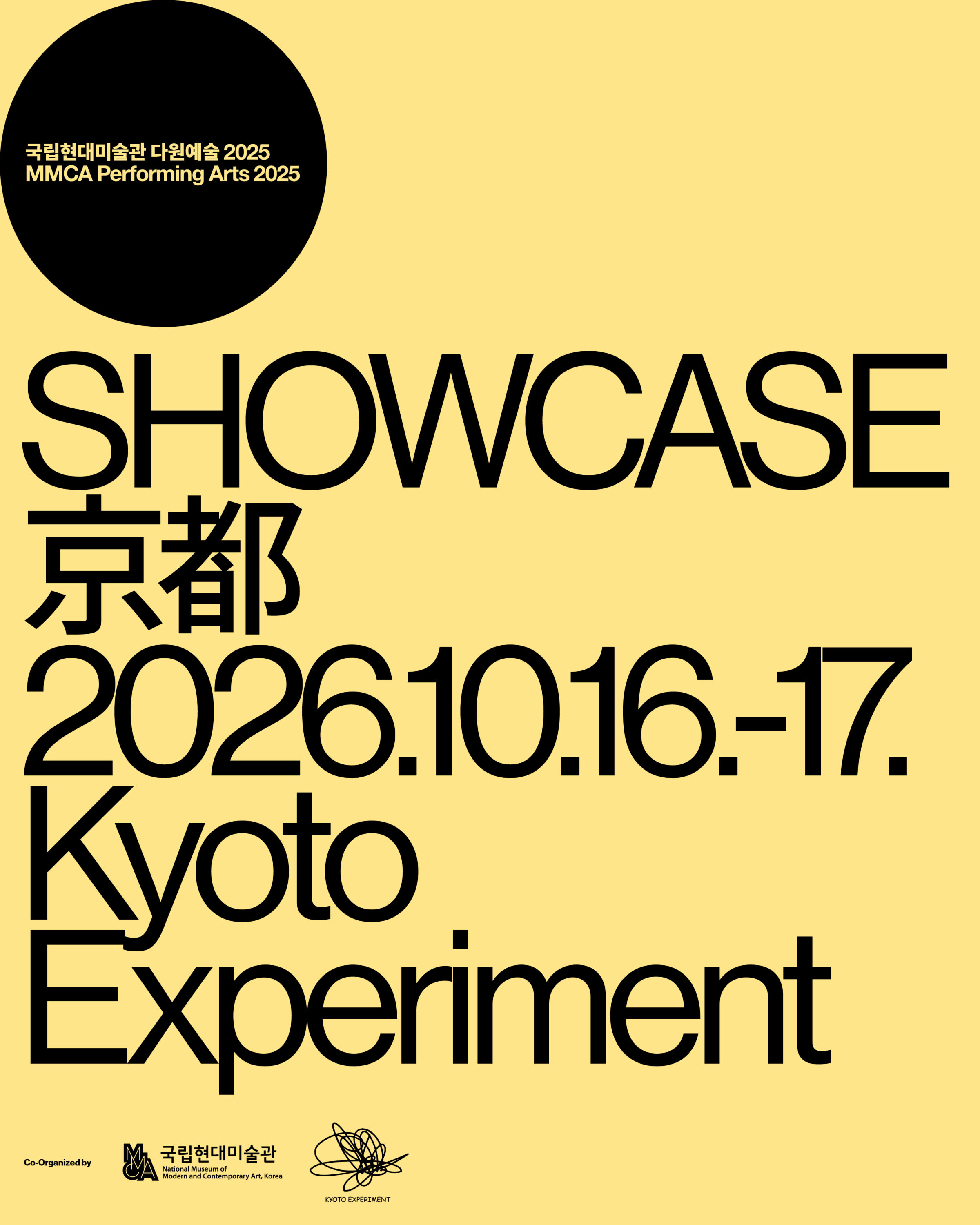
A showcase featuring Kim Kangyeon, Lee Minjin and Park Minhee, presented as part of Kyoto Experiment 2026. The project is the result of an exchange between the performing arts division of the National Museum of Modern and Contemporary Art, Korea (MMCA) and Kyoto Experiment. Both organizations have presented cutting-edge artistic expressions that reflect the currents of their times in Seoul and Kyoto. Through this exchange, they introduce emerging talents from each city to one another. This year, artists from MMCA have been invited to Kyoto.
Sung Yonghee, a curator at MMCA, has written a column introducing MMCA’s activities and the three artists taking part in this showcase.
MMCA Performing Arts
Provided by MMCA Performing Arts
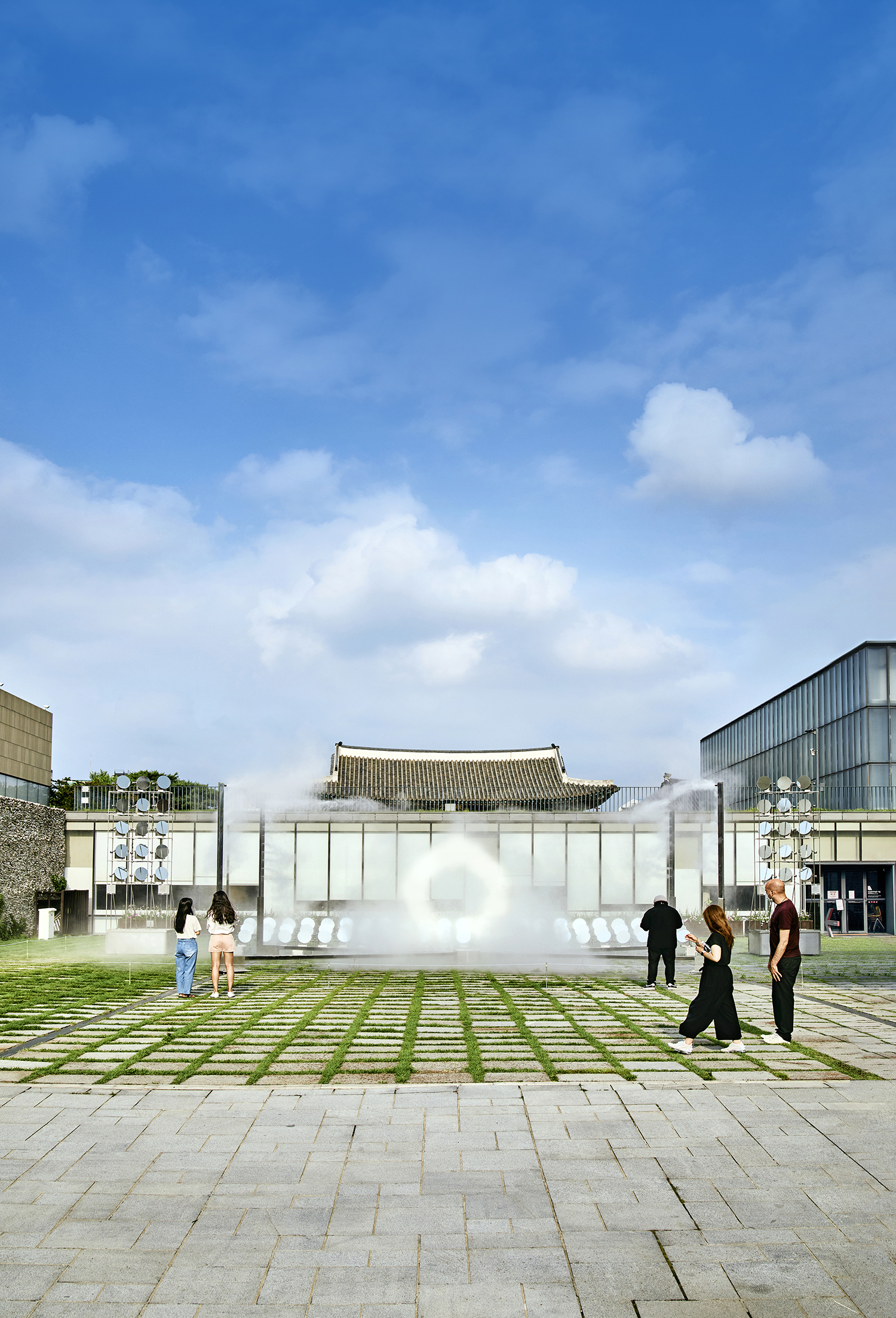
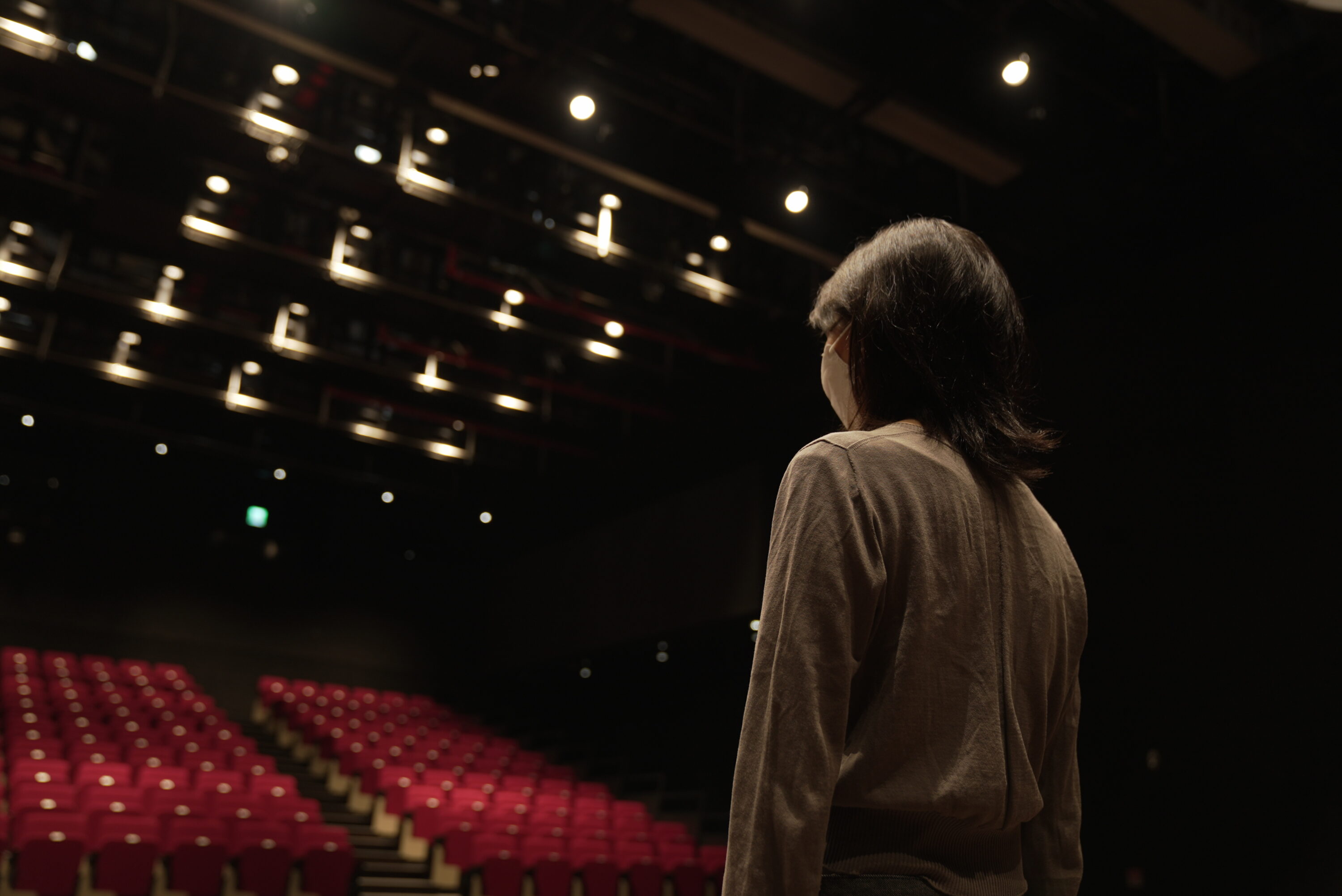
The MMCA Performing Arts goes beyond exhibition-based visual arts, attempting to weave together various genres, media, and interdisciplinary convergence. The vision of MMCA Seoul, which opened in 2013, is to foster dynamic future art and productive contemporary discourse—a vision directly put into practice through the active establishment and operation of specialized physical spaces and concrete programs, namely the black box theater for MMCA Performing Arts and the cinema theater for MMCA Film and Video.
Yet, introducing MMCA Performing Arts beyond this official text remains a delicate task, as it requires defining a practice that constantly resists categorization. In Korea, this territory is referred to as 다원예술 “Dawon Arts” (multidisciplinary arts), a peculiar and liminal form that inherently rejects any singular, institutional definition. Several years ago, contemporary art practitioners in Japan also found this term difficult to translate and temporarily adopted the Chinese characters “多元 Dawon” as well. While it literally translates closer to “multidisciplinary” art, it remains a territory that slips away from standard institutional categories.
Provided by MMCA Performing Arts
Rather than treating MMCA Performing Arts merely as a direct translation of “Dawon Arts,” my curatorial focus centers much more deliberately on the act of “Performing” itself. I expand this concept beyond simply staging dance or theater in a museum to include the performing of diverse objects and non-human beings, alongside the performativity of the institution, media, genres, and subjects. It is precisely at this intersection of the performing of diverse objects and the various efforts toward performativity that they connect, through which I hope to open up spaces of excess and discord that can no longer be easily contained within standardized systems.
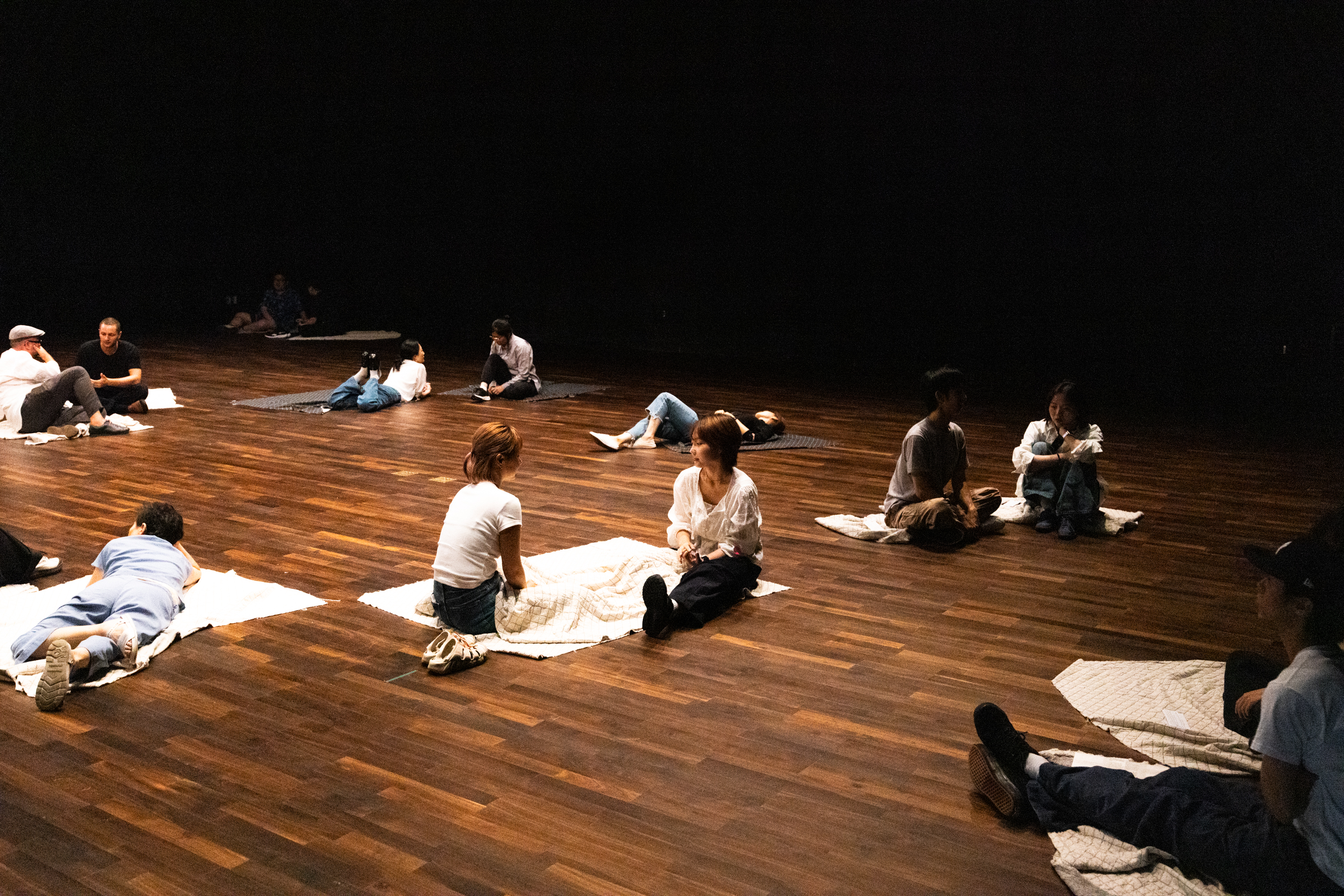
Because our black box theater is nested within a museum, artists and curators can work in much closer proximity, allowing for a more reflexive approach to the production process. However, focusing so closely on creating new pieces naturally limits how frequently we can run programs. Unlike a conventional theater that simply stages completed works, we shape each project by fully committing our available resources. Consequently, our rehearsal and setup periods are extensive, meaning we can dedicate ourselves to only one major production per month. While these monthly productions allow us to commit deeply to a singular project, they naturally left us yearning for spaces dedicated to more spontaneous experimentations and fluid dialogues, particularly with younger artists. It was from this desire for balance that we developed a new showcase program rooted in international exchange. Rather than serving as a compromise, the showcase acts as a vital, complementary platform—a flexible and dynamic gathering spanning just two to three days, where four to eight emerging artists present their work in a continuous, relay-style format.
Provided by MMCA Performing Arts
MMCA Performing Arts Showcase
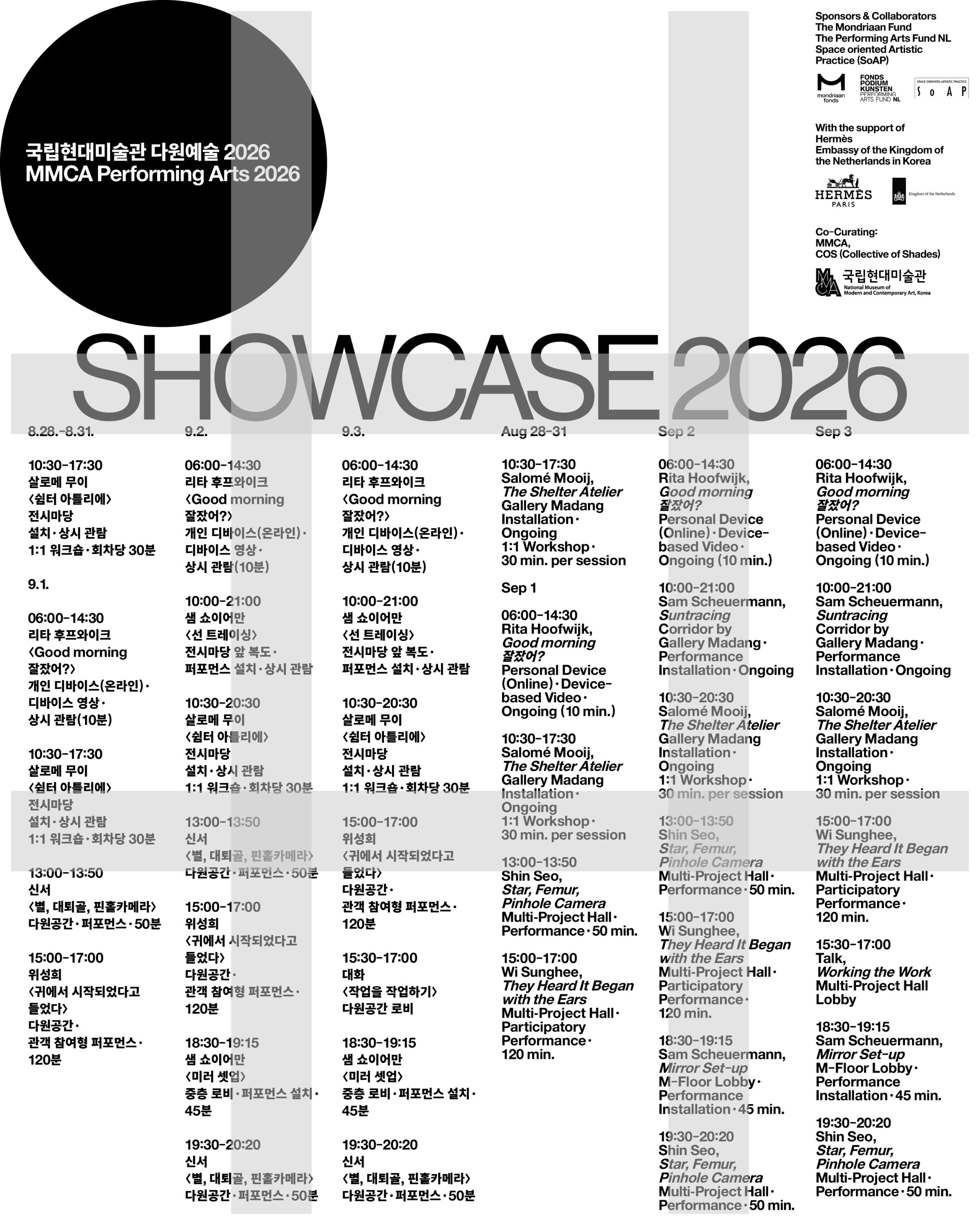
Launched in 2024 to discover emerging artists, the MMCA Performing Arts Showcase fosters international exchange. The first edition was hosted in collaboration with Art Hub Copenhagen, Denmark, at MMCA in September 2024, followed by a second showcase in Copenhagen in April 2025. Concurrently, a partnership with Kyoto Experiment began in September 2024 in Seoul, featuring an initial exchange with artists Kim Kangyeon, Lee Minjin, Nakama Ayaka, and Araki Masamitsu. Expanding this network, MMCA will host a collaborative showcase with Dutch artists in September 2026, followed by a return showcase in the Netherlands in the spring of 2027. The performances presented here in Kyoto are the direct outcome of this shared itinerary.
Provided by MMCA Performing Arts
The showcase unfolds primarily around the axis of cross-cultural contrast and comparative dialogue. By featuring young artists born in the late 1980s and juxtaposing their performances with those of emerging artists from another city, the program sought to examine how different environmental and cultural conditions shape their respective artistic practices. However, these points do not merely contrast; they interconnect and intersect. As Hans Ulrich Obrist once said [1], curating is the act of connecting different elements and making junctions. By weaving together and contrasting individual differences and regional contexts, the showcase sought to offer alternative perspectives. As we narrowed the focus to young artists, we encountered a fundamental question: do the forms of art and methods of its creation actually differ according to generation and locality?
Kim Kangyeon, Lee Minjin and Park Minhee
Having sketched the broader context of the program, we can now view the selection of these artists through the exact same lens. Kim Kangyeon and Lee Minjin were the participating artists in the 2025 MMCA Performing Arts Showcase, while Park Minhee presented her work as part of the July program for MMCA Performing Arts 2024: Space Elevator.
One could categorize their practices by conventional mediums—Kim Kangyeon working with video and performance, Lee Minjin with dance and choreography, and Park Minhee with music and tradition. However, once you witness their performances, your attention will naturally shift away from these disciplinary divisions toward the unique modes of thinking and sensing that they possess. Furthermore, you will find yourself wanting to weave these three distinct performances together, recognizing why MMCA Performing Arts and Kyoto Experiment have joined forces to present them here before us.
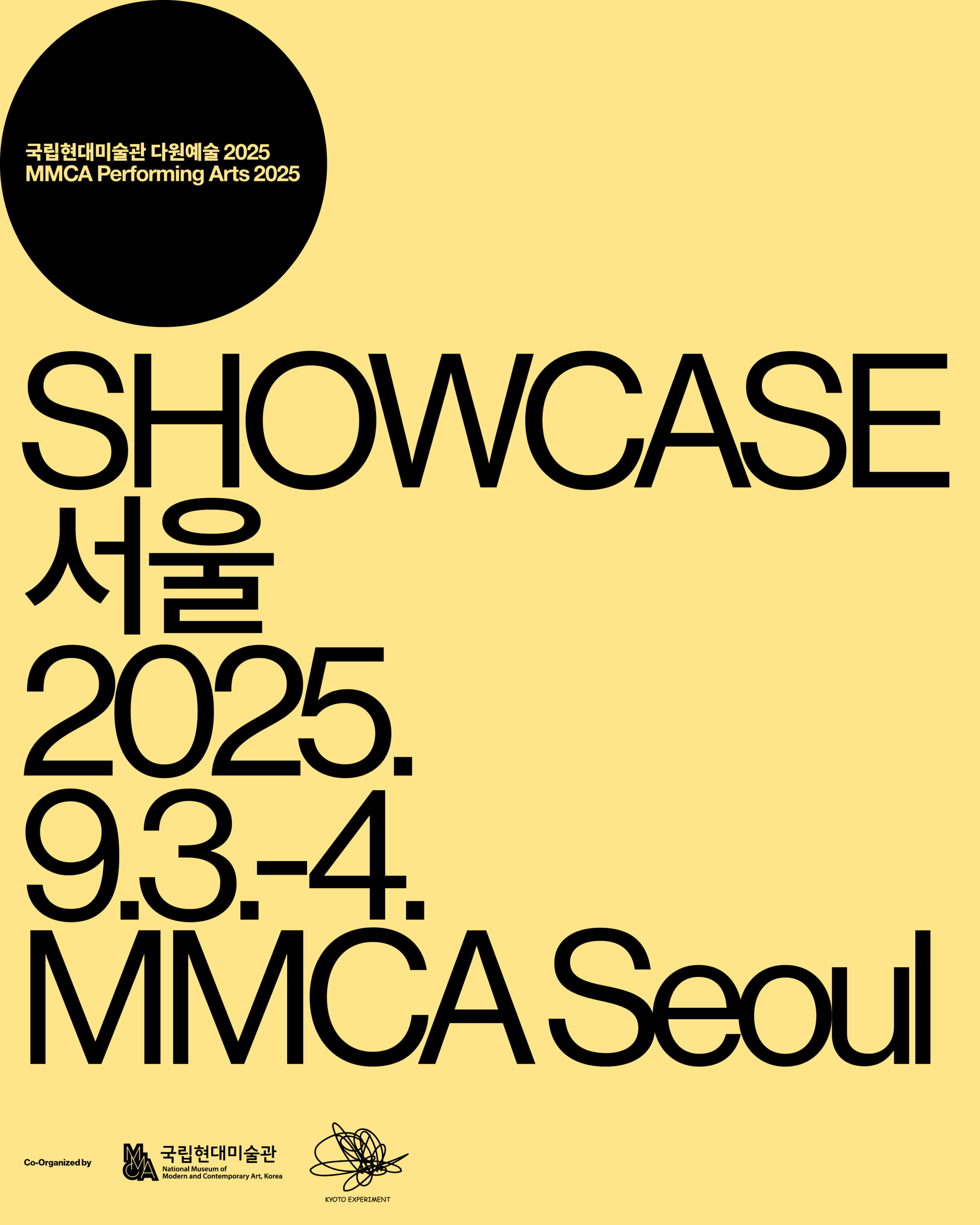
Provided by MMCA Performing Arts
Rather than offering a standard biographical introduction for each artist, I want to convey to the audience that they are developing their own idiosyncratic methods rather than following typical, conventional performance practices. They are individuals who deliberately struggle outside the boundaries of established genres and customs to forge their own language and discover new ways of sensing. This approach serves as a gentle response to what MMCA Performing Arts consistently and closely observes: the necessity of engaging with artistic forms that can no longer be contained within single perspectives or standardized systems.
Perhaps these practices and the artists behind them can be understood as nomadic subjects, a concept embraced by theorists like Rosi Braidotti. Or perhaps they represent a divergence of senses rather than a convergence of meaning. Consequently, it remains difficult to neatly categorize or define what these works are.
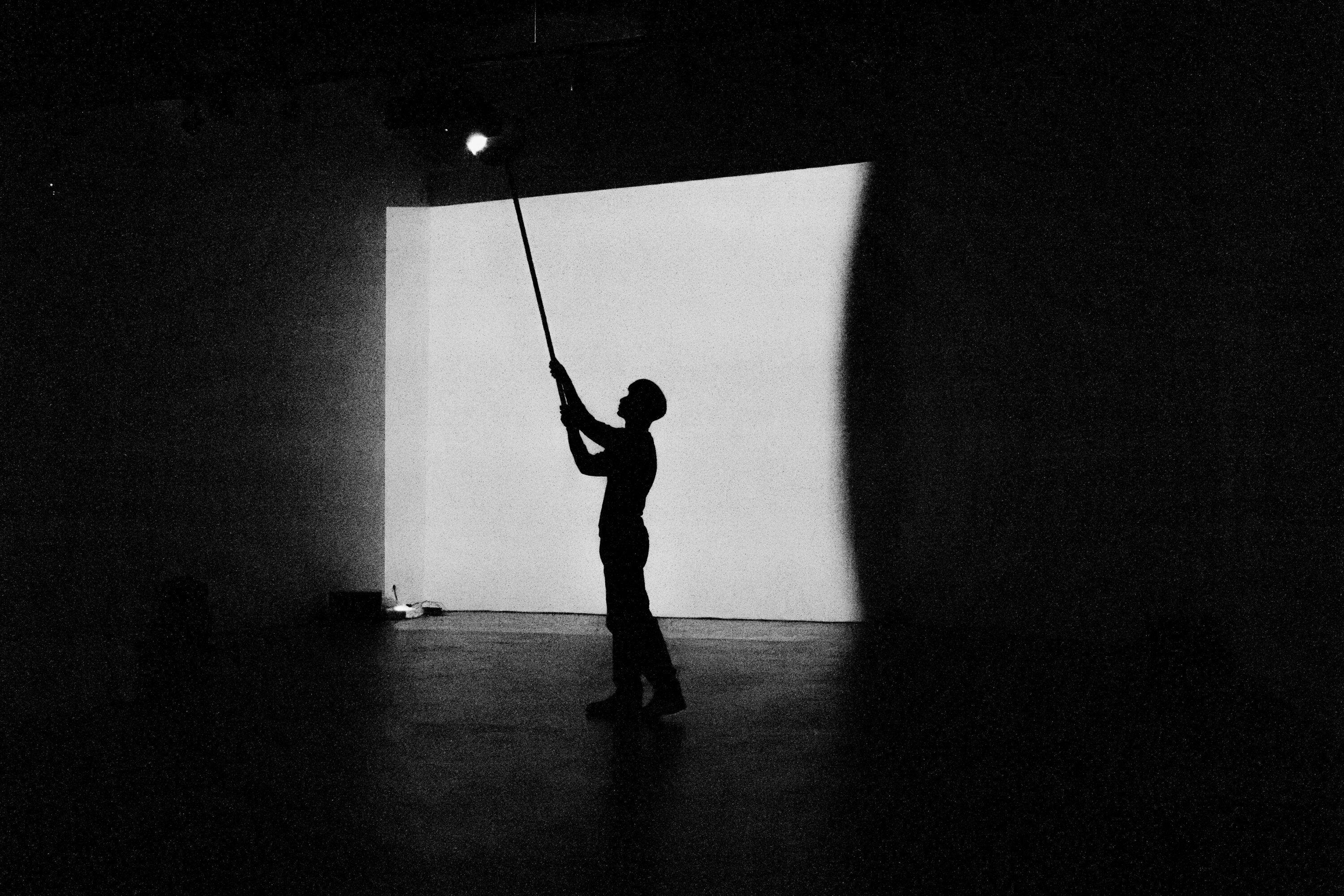
Photo by Lee Kangsun. Courtesy of Ob/scene Focus.
Kim Kangyeon is interested in revealing the layers and structures of worlds that escape sensory perception. For him, the theater serves both as a gateway and a space where this attempt inevitably fails. It is not merely a physical space, but a field where fiction is projected onto reality and imagination is superimposed upon the seemingly clear world. He summons what has been deleted, what is impossible, and what remains unfinished, only for these invocations to drift like a mirage. This sense of limitation or dissonance in perception remains a central theme in Hidden Village, presented here in Kyoto. One might ask why he chose the phonautograph—a device developed in 1857 by the French printer and inventor Édouard-Léon Scott de Martinville—as the starting point for this work in 2024. It was the first device in human history to successfully record sound in a physical form. Yet, what is more intriguing is that this acoustic visualization tool does not “record” in the modern sense; it creates a trace without playback. Is he perhaps trying to speak of a “sound without ears,” a wave pattern reconstructed by machines, and the discrepancy between sensation and reality exposed by this very non-reproducibility? This performance peers beyond the reality constructed by our senses toward other existences or illusions. The more one contemplates it, the more the inevitable limitations of human finitude permeate the theater. With questions regarding the “impossibility of correlationism” and the time before and after human existence (ancestrality), this work perhaps approaches the very impossibility of existence.
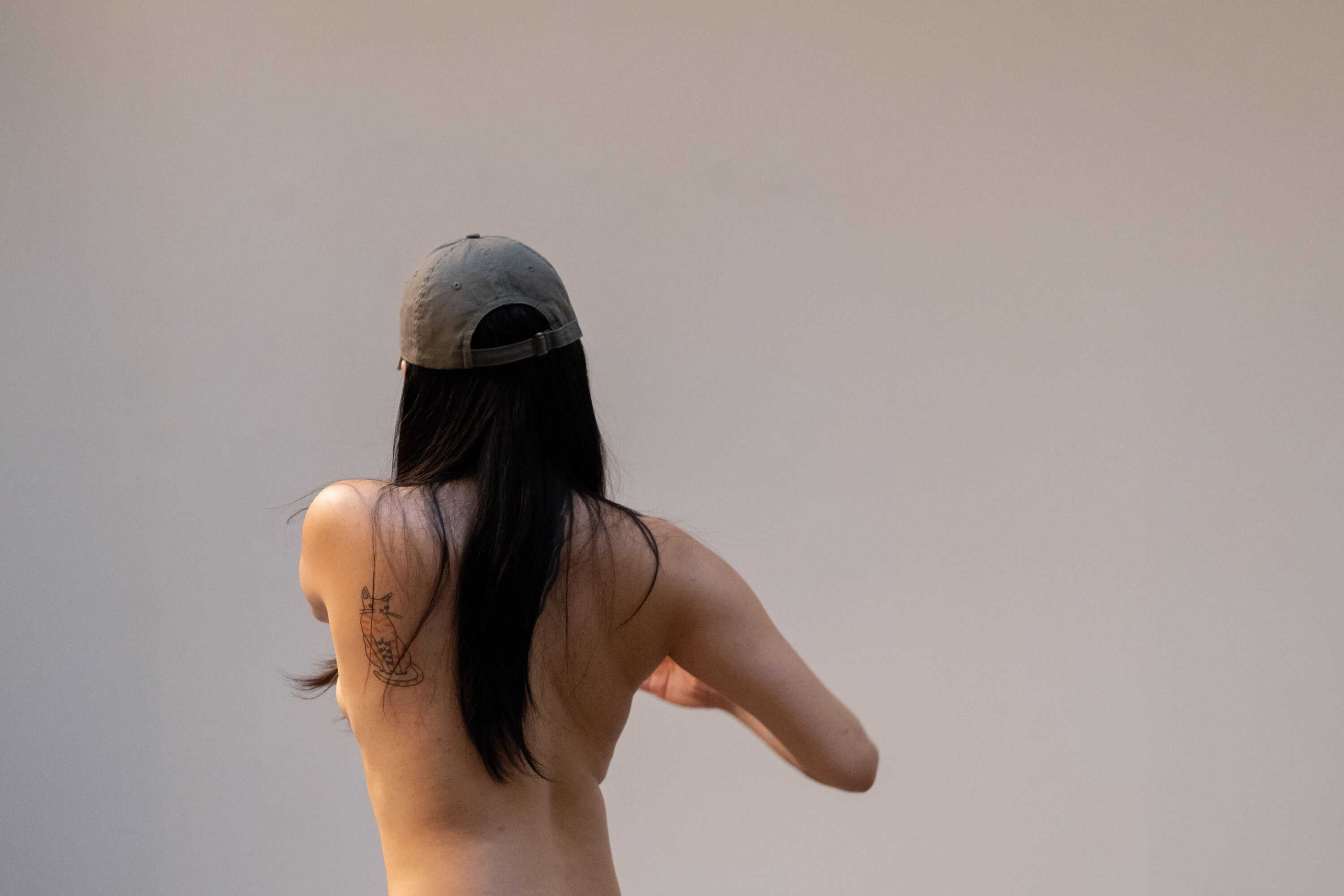
Photo by Lee Kangsun
Lee Minjin observes the wave of “conceptual dance”—which once heavily referred to or actively utilized language to convey the choreographer’s thoughts—from “beyond the horizon,” now that it has become an overwhelming global tide. On stage, the dancer exists simultaneously as subject and object, as an individual and as a part of the artwork. How should the dancer respond to the demand to sway on that boundary, to choose or to abandon one side? It seems Lee Minjin wishes to be neither “in-between” nor to choose one side; she aspires to be both, or perhaps neither. In this desire, the work poses an essential and difficult question: can the dancing body ever be liberated from the structural demands of expressive responsibility, the expectations of representation, and the proof of identity? She accepts the paradoxical situation where the more one attempts to escape the trends, compulsions, and proofs of identity, the more strongly one becomes codified, and the more one tries to differentiate, the more distinctly the boundaries are revealed. Rather than fleeing from these signs, she calmly attempts to rest her body directly upon them. Though difficult to articulate in the main text, I feel compelled to add in closing that the very signifier—the identity of the “female” dancer—remains the position of a nomadic subject, an unanchorable site.

ⓒMoonsick Gang
Finally, explaining Park Minhee’s work remains an even more challenging task, as she unpacks the social contexts and complex contemporary questions she faced while studying Gagok, Gasa, and Sijo—traditional Korean vocal genres—through and within the music itself. These genres remain unfamiliar even to Korean audiences. While our historical flashback to traditional music usually halts at the surface of the Joseon era Pansori, Park’s music reaches temporally beyond the Joseon era into the Goryeo dynasty, probing deeply into the multilayered cultural and social conditions embedded within those times. Moreover, her musical practices of modernization and deconstruction—such as deconstructing and recombining the lyrics of Gagok, spatializing vocal utterance, or restoring music to a state that flows through the body—have been anything but conventional. Recently, directly opposite the tradition that once resisted Western hegemony, she substitutes the contemporary systemic questions of capitalism, seeking a connection among existences pushed to the margins through universal sensations and sounds that transcend music. The ancient voices manifested within the darkness of ROHM Theatre Kyoto are not a fixed tradition, but perhaps a deferral that resists stasis—a perpetual cultivation that dwells within and connects the body. Traveling between past tradition and future tense, these connected voices present themselves as yet another impossibility.
Impossibility glimmers across all three performances. Rather than leaning on a specific keyword, I find myself simply watching the grueling efforts of these artists hanging onto the impossible—their poignant gestures as they try to take a step forward into another world, or perhaps step backward, while bound by the inevitable limitations of the physical body and existence. These performances are, in themselves, an embodied structure and the specific temporality of an embodied human. If, by experiencing them together, we can feel something strange yet inspiring stirring within our very finitude—what could that be?
This text was written by Sung Yonghee, but it incorporates the shared thoughts and writings of Kim Jaeyeon and Lee Somi, who co-curated MMCA Performing Arts. Portions of this text draw from previously published materials, and some sections were translated by Google Gemini.
[1] Hans Ulrich Obrist, Everything You Always Wanted to Know About Curating But Were Afraid to Ask (New York: Sternberg Press, 2011).
- related programs
-
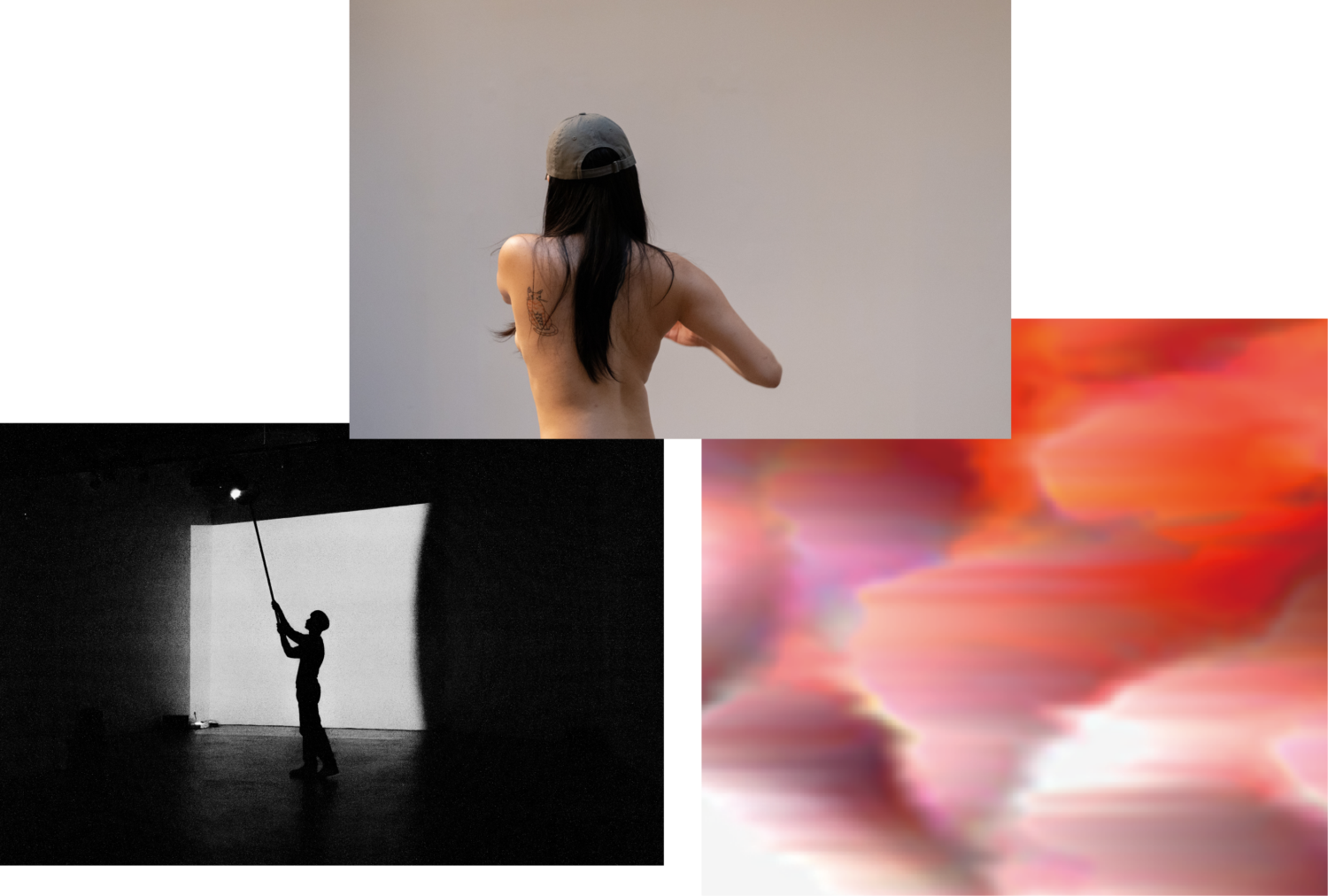
Kim Kangyeon, Lee Minjin, Park Minhee